

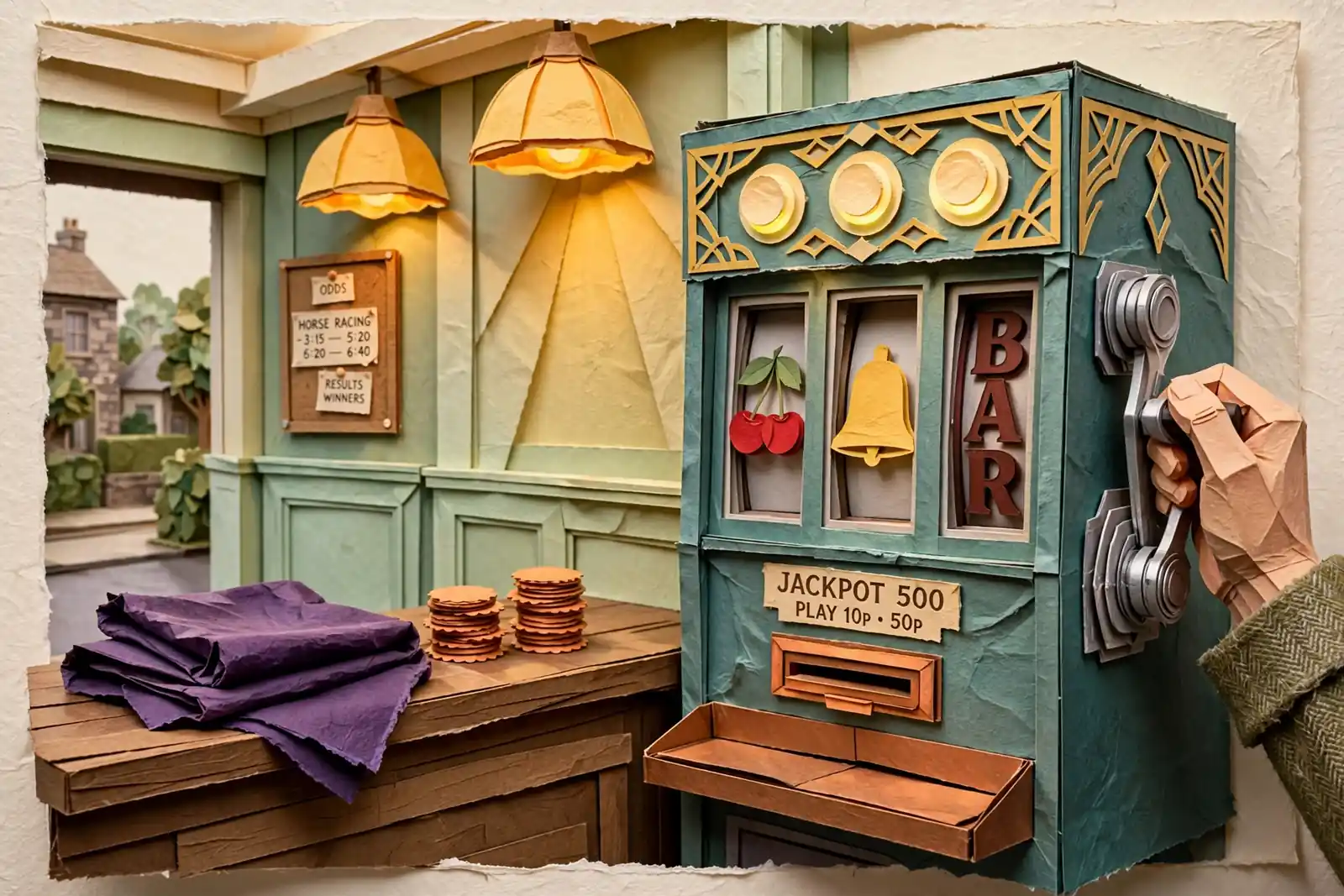
A practical guide to feature access, session volatility, demos and the limits of buying a bonus round.
What a Bonus Buy Changes—and What It Does Not
A bonus buy is an in-game option that gives access to a slot’s bonus round without requiring the ordinary sequence of spins to reach it. In a standard session, the base game runs first and the bonus feature appears only when its conditions are met. With a buy option, the player chooses the feature directly, where that choice is available.
That is the essential distinction. A bonus buy changes the route into the feature, not the identity of the slot. The reels, symbols, paytable and rules of the bonus round remain those designed for that particular game. It is not a separate game layered on top of the original one, although the price of entering the feature is treated as an additional wager within the game.
The phrase “buy the bonus slot” can therefore be misleading. The slot itself is not purchased, owned or unlocked for permanent use. What is bought is access to one bonus-round attempt. Once that round ends, the base game and its normal rules remain in place. Another entry, if offered, is a new transaction rather than a continuing entitlement.
A buy option also does not turn a slot into a guaranteed-win product. The bonus round can contain winning combinations, but its result is still determined by the game’s rules and random outcome. Paying to enter removes one waiting stage; it does not remove uncertainty. The feature may be reached more quickly, but it cannot promise a particular return.
Fast Payout Online Casinos in the UK: What Claims Mean
This matters when comparing an ordinary spin with a purchased feature. Ordinary play exposes the player to the slot’s base-game sequence and the possibility of triggering the bonus naturally. A bonus buy concentrates the action around the feature itself. The two routes may feel very different, yet neither changes the underlying design of the game.
The surrounding slot can still have familiar arrangements. A low-volatility title, for instance, may use five reels, at least twenty-five paylines, fixed jackpot amounts rather than a progressive pool, and a bonus round built around multipliers applied to accumulated wins. Those details describe the game’s construction; they do not make the buy option safer or more reliable. A multiplier is a rule, not a promise.
Availability is not universal. Some slots include a bonus-buy button, while others require the feature to be reached through ordinary play. Where the option exists, its presentation and conditions belong to the individual game. The name alone says little about the character of the session.
So, what is a bonus-buy slot in Britain? It is an online slot that offers a paid shortcut to its bonus round, subject to the game’s own rules and the applicable playing conditions. The shortcut is real. The certainty is not.
Casino Games: Slots, Table Games and Live Play
Bonus Buys, Volatility and the Shape of a Session
A bonus-buy feature does not give every slot the same temperament. The surrounding game still has its own volatility: the pattern by which wins arrive, how frequently they appear and how sharply their size can vary. This matters because two bonus-buy slots may offer a similar route into a bonus round while creating very different sessions in ordinary play.
Volatility is best understood as rhythm rather than a promise about the next spin. A low-volatility slot tends to spread its returns across more frequent, smaller wins. A high-volatility slot generally leaves longer spaces between winning combinations, with the possibility of larger individual payouts when one does arrive. Neither description predicts a particular result. It describes the broad shape of results over repeated play.
That distinction is easy to lose when attention settles on the bonus round. The buy feature is visually dramatic: it places the most decorated part of the slot near the centre of the experience. Yet the game’s volatility remains in the background, governing how the rest of the session feels. A low-volatility bonus-buy slot may produce a steady succession of modest outcomes before and after the feature. A high-volatility title can feel much quieter, then less restrained when a significant combination finally appears.
The gentler rhythm of low volatility
Across most titles, low-volatility games typically produce a winning combination every three to six spins on average. This is a description of long-run tendency, not a timetable. A run of losing spins can occur in a low-volatility game, just as a high-volatility title can produce several wins close together. Average frequency is not a personal schedule, and the reels do not keep appointments.
Best Video Slots UK: Reels, Paylines and Play
The smaller size of many low-volatility wins is part of their design. Returns are distributed rather than concentrated, so a session can contain more visible signs of activity: a line win here, a modest combination there, perhaps a bonus round appearing among them. That activity can make the balance feel less severe than it would in a game where wins are rarer. It does not turn a loss-making game into a profitable one.
This is where language such as “steady” can mislead. Steady describes the appearance of the sequence, not a guaranteed financial result. Frequent small wins may merely reduce the speed at which the balance moves down, or occasionally lift it for a while. They are not evidence that the slot has become generous in any lasting sense. The quiet arithmetic remains.
The sharper rhythm of high volatility
High-volatility slots distribute the drama differently. Winning combinations tend to arrive less often, while individual wins may be larger. Between those moments, the session can feel uneventful or expensive, particularly when the player is watching for a bonus round. The attraction lies in the possibility of a more substantial event, but possibility is not frequency and neither is a promise of profit.
For someone comparing bonus-buy slots for UK players, volatility therefore says more than the presence of a buy button. It indicates whether the game’s ordinary rhythm is likely to be punctuated by smaller returns or by longer stretches with little apparent movement. A lower-volatility title may suit the aesthetics of repeated, modest outcomes; a higher-volatility one may create a more abrupt sequence. The labels do not rank the games. They describe different distributions of results.
The phrase “bonus buy” can make this contrast seem secondary, as though entering the feature were the whole point. In practice, the feature sits inside the slot’s wider mathematical design. A bonus round does not erase the difference between a game that commonly returns small amounts and one that reserves more of its potential for less frequent events. Nor does the feature smooth out an uneven session simply because it is available.
3-Reel Slots in the UK: A Guide to the Format
Frequency is not value
Winning more often is not the same as winning more overall. A low-volatility slot can produce a winning combination every three to six spins on average across most titles, yet the amounts returned by those combinations may remain small. A high-volatility slot can go quiet and then produce a larger win, but the longer wait carries its own cost. Counting winning spins without considering their size gives only half a picture.
The same caution applies to a bonus round. Its presence may alter the sequence of outcomes, but it does not remove the house edge built into a game that has one. Over enough sessions, a game with a positive house edge gives the player a mathematically negative expectation, whether losses arrive as a slow leak or in more conspicuous drops. A gentler pattern can change the emotional texture of play; it cannot change that underlying direction.
That is the slightly uncomfortable distinction between comfort and advantage. Low volatility may make a session look busier, while high volatility may make it feel more dramatic. Neither label supplies a reliable route to profit. A slot can be active without being favourable.
For British online play, this also places the phrase “bonus buy slots” in its proper scale. It identifies a feature within a game, not a separate class of mathematics. The useful comparison is between session shapes: frequent smaller outcomes versus fewer, potentially larger ones; a more even-looking sequence versus a more interrupted one. The feature may attract attention, but volatility determines much of the surrounding weather.
And weather is not control.
Finding Bonus-Buy Features in Slot Games
A bonus-buy feature rarely stands alone. It belongs to the architecture of the slot: the reels, the way a stake is spread across paylines, and the rules governing the bonus round itself. Looking at that architecture is more useful than treating “bonus buy” as a complete description of a game. Two slots may both offer paid access to a feature while presenting very different layouts and visual rhythms.
Best RTP Casino Slots in the UK: What RTP Means
The reel count is the first visible clue. A five-reel slot can apply a bet across all five reels, making the arrangement familiar even when the symbols, themes and bonus rules differ. The number of reels does not explain what the bonus will do, nor does it predict a particular result. It simply describes the stage on which the combinations are formed.
Paylines add another layer. They determine which symbol arrangements count as winning combinations and how widely a stake is distributed across the reel display. A slot with many paylines may look busy because several winning routes are being assessed at once; a simpler layout may place more emphasis on a narrower set of combinations. Neither presentation, by itself, establishes whether a bonus-buy option exists. The feature belongs to the game’s rules, not to the visual clutter.
Some low-volatility slots are built around five reels and twenty-five or more paylines. Their bonus rounds may use multipliers applied to wins that have accumulated during the feature. That arrangement gives the bonus a recognisable internal shape: wins are gathered, then a multiplier changes their value according to the round’s rules. It is a structural description, not a promise of frequent access or a particular return.
The jackpot design can also distinguish one slot from another. Fixed jackpot amounts are a different construction from progressive pools, where the prize is presented as part of a changing shared total. A bonus-buy facility can appear alongside either kind of jackpot design, so the presence of one feature should not be mistaken for evidence of the other.
These details help identify what kind of slot is being considered:
- Reels: the visible columns where symbols land, including the common five-reel format.
- Paylines: the routes used to assess winning symbol combinations.
- Multipliers: rules that can increase accumulated feature wins.
- Jackpot structure: fixed amounts or a progressive pool.
A catalogue of labels is less revealing than the mechanism beneath them. The same phrase—bonus buy—can sit on top of sharply different game structures. Names decorate the machine; reels and rules do the work.
Bonus-Buy Games in a Free Demo
A free demo of a slot creates a peculiar little theatre. The reels turn, symbols fall into place, sounds announce events and a bonus-buy button may sit where it would sit in a real-money version. The scene resembles gambling closely enough to feel familiar, yet its money is only stage money. No deposit is made, no stake is transferred and no winnings can be withdrawn.
That distinction matters most when the feature being explored is a bonus buy. In ordinary play, the bonus round may appear after a sequence of spins determined by the game’s rules. In a demo that includes the purchase option, the feature can be opened without paying for it. The player can inspect the transition from the base game to the bonus round, see how the interface presents the choice and observe how the round unfolds. It is a rehearsal, not a transaction.
What a demo can show
Free-play versions are useful because a bonus buy is not merely a label on a menu. It changes the order in which the game is experienced. Instead of waiting for the bonus round to arrive during ordinary spins, the demo may place the feature immediately within reach. This lets the player see whether the game moves straight into a different reel layout, presents a selection screen or uses another form of entry.
The display may also show how the game records the feature’s progress. Accumulated wins, multipliers, free spins or other visible mechanics can be followed without the distraction of a real balance. The symbols still have their visual meaning. The sound effects still try to turn arithmetic into drama. Even the button inviting a purchase can look impressively definite, although it has no power over a bank account in a free version.
A demo can therefore answer practical questions about presentation:
- Is the bonus round easy to distinguish from the base game?
- Does the interface explain what is happening?
- Are the rules displayed before the feature begins?
- Does the pace feel comprehensible rather than hurried?
- Are wins and feature events recorded clearly?
These are modest questions, but they are often more useful than the decorative language placed around a slot. A game can be bright without being readable. A free version gives the mechanics a chance to speak for themselves.
The balance is not money
The balance shown in a free game is fictional. It may rise when a winning combination lands and fall when a spin is made, but neither movement represents a payment or a loss of funds. A large balance at the end of a demo session is not a cash result waiting to be collected. It is simply a display value used to keep the simulation moving.
That point is easy to overlook because casino interfaces borrow the grammar of financial software. A number sits in a corner. A button reduces it. Another event increases it. The arrangement resembles a small account, although nothing is held there. No payout is awarded from a free demo, and no amount accumulated through a bonus buy can be transferred to a bank account, wallet or gambling balance.
The same applies when a feature appears unusually generous. A favourable run in free play is not evidence that a real-money session would reproduce it. Nor does an unproductive demo prove that the paid version is somehow colder. The simulation displays outcomes generated within the game environment; it does not make promises about a later session.
This is where the charm of the format becomes slightly dangerous. Fake money removes financial risk from the demonstration, but it does not remove the emotional effect of winning. A cascade of symbols can still produce satisfaction. A near miss can still irritate. The old machinery of anticipation works perfectly well without a real pound attached to it.
High-RTP Slots in the UK: Understanding RTP
What free play cannot establish
A demo can show the route into a bonus round, but it cannot establish that a particular feature will appear at a predictable point during paid play. The player may activate the demonstration repeatedly and see a range of outcomes, yet those observations remain confined to the simulated session. They do not form a timetable for real-money play.
Nor can a demo establish a personal result. A feature that produces a substantial fictional win may be entertaining to watch, but the event does not reserve a similar outcome for a later deposit. The reverse is also true: a sequence of disappointing demo rounds does not create an entitlement to a better result afterwards. Randomness has no memory simply because the balance is imaginary.
The free version may also present the game in a simplified setting. Menus, payment screens and account controls are absent or inactive because no real transaction is taking place. The demo is consequently best understood as a look at the game’s visible operation, not a complete portrait of the environment surrounding paid play. It can show the reels and the bonus round; it cannot turn fictional credits into a gambling account.
There is a quieter limit as well. Repeated demo play can create familiarity with a game’s images and sequence without answering whether the feature suits a person’s habits. Knowing where a button sits is not the same as knowing how a real balance would feel when that button has a cost. The psychological distance between “watching the feature” and “paying to enter it” is precisely what the demo cannot reproduce.
Online Slots Payout Percentage: What It Measures
A sensible use of the simulation
The most grounded use of free play is inspection. Rules can be read, controls can be tested and the distinction between the base game and the bonus round can be made visible. A player can decide whether the design is understandable before any real-money question arises. That is a genuine benefit, provided the fictional balance is treated as a teaching aid rather than a forecast.
It is also worth remembering what the absence of payment means. A free demo does not create a gambling win, does not generate a withdrawal and does not demonstrate that a bonus buy is profitable. It removes the financial stake; it does not rewrite the game’s underlying arrangement. Where a game has a positive house edge, the mathematical expectation remains negative over enough sessions, whether the losses arrive gradually or are concealed by occasional entertaining results. Free play does not alter that structure. It merely lets the structure be observed without money changing hands.
That makes the demo a window, not a doorway. It offers a view of the bonus-buy feature, its language and its choreography. The money, however, remains fictional.
Casino Bonuses and the Time Limit to Notice
The phrase “casino bonus buy” brings together two different kinds of offer. One belongs to the slot itself: a feature built into a particular game that may allow access to its bonus round. The other belongs to the casino: a promotional arrangement attached to an account, a deposit, a campaign or a particular set of terms. They may appear beside one another on the same website, but they are not the same mechanism.
The phrase “bonus buy” can mean a platform carrying slots with a buy feature, a platform running a promotion near those games, or a page using both ideas in one headline.
That distinction matters because a casino promotion does not automatically pay for a bonus buy. Nor does it necessarily make every slot available with a buy feature. A casino may advertise a reward while the selected game has no such in-game option; conversely, a slot may contain a bonus-buy function without the casino offering any separate promotion around it. The word “bonus” is doing two jobs, which is a small linguistic trick with financial consequences.
The casino offer is separate from the slot
A casino bonus is a condition created by the operator. Its wording may describe who can receive it, when it becomes available, where it can be used and what must happen before any resulting balance can be withdrawn. Those details belong to the promotion, not to the slot’s design.
The in-game buy feature is narrower. It is an option presented within a participating slot, and its availability depends on that game and the way it has been configured for the relevant market. A casino promotion can sit alongside it, but cannot be assumed to unlock it merely because both use the word “bonus”.
This is why a page advertising an online casino with bonus-buy games should be read as a description of the casino’s game selection, not as proof that the operator supplies bonus-buy credit. “Games where the bonus can be bought” describes a feature of those games. “Casino bonus” describes an offer from the platform. The two may meet; neither should be treated as the other.
The clock belongs to the promotion
Promotional bonuses are not permanent additions to an account. Their terms set the period in which the offer must be noticed, accepted or used, depending on the wording. A specialist review gives 48 hours as the stated lifespan for bonuses. That is a reported promotional condition, not a universal rule for every casino offer in Britain.
The practical point is less dramatic than the number suggests: a bonus can expire while the slot remains available. The game does not disappear because a casino campaign ends, and the expiry of a casino reward does not alter the slot’s built-in feature. A player who returns after the promotion has closed may still see the same game, but not necessarily the same account offer.
The timing may also begin at a point defined by the terms rather than by the first visit to the casino. An offer could be connected with its presentation, activation or another stated event. No assumption is safe merely because the banner remains visible. Promotional pages are often written in a language of invitation, while the important information sits in the conditions beneath it.
What to inspect before treating an offer as useful
A sensible reading separates four questions.
-
What is the reward?
The promotion should identify what is being offered and whether it is credited as cash, bonus funds or another form of account benefit. A reference to bonus-buy play does not by itself establish that the reward may be spent on a buy feature. -
Which games qualify?
A casino may connect an offer with selected games rather than its entire slot library. A game can therefore be present on the site yet excluded from the promotion, or included in the library without offering the in-game purchase being sought. -
When does the offer expire?
The 48-hour period reported by a specialist review illustrates why the date and time need attention. A bonus with a short life is not equivalent to a feature that remains part of a slot’s interface. The two clocks should never be confused. -
What conditions follow acceptance?
The terms may govern how the bonus is used and whether funds connected with it can be withdrawn. Those rules are attached to the casino campaign. They do not become mathematical properties of the slot and do not change what the game’s own buy option is designed to do.
Why the wording matters
“Casino sites with bonus buy” can therefore mean several things: a platform carrying slots that include a buy feature, a platform running a promotion near those games, or a page using both ideas in one headline. The headline alone cannot settle the difference.
The cleanest description is more modest. A casino may host games with bonus-buy functionality, and it may separately publish a bonus with its own eligibility and expiry terms. Whether the promotion can be used for that particular feature depends on the written conditions, not on the proximity of two banners.
A 48-hour promotion is a temporary invitation. A slot feature is part of the game’s design. Same word, different clock.
Bonus-Buy Games: A Catalogue Without a Top Ten
A list of online bonus-buy slots can look authoritative while saying very little. Titles appear, disappear, change their available features, or arrive at different casinos under different commercial arrangements. A new bonus-buy slot is not automatically a better one, and an older release is not automatically a relic. The label describes an option within the game, not a medal awarded by history.
A more useful catalogue begins with the slot’s visible structure. The reels show how symbols are arranged; the paylines show how winning combinations are assessed; the bonus round reveals what kind of event the buy feature leads towards. These details give a clearer picture than a parade of names detached from their rules.
Some games are built around five reels, with bets applied across the full layout. Others make their identity through unusual reel shapes, expanding symbols, cascading wins or several bonus-round stages. Multipliers may be central to the design, while another title may rely on free spins, changing symbols or an accumulating feature. Such differences matter because “bonus buy” is a functional label, not a complete description of the game.
Low-volatility designs have their own recognisable pattern. They typically use five reels and twenty-five or more paylines, with fixed jackpot amounts rather than progressive pools. Their bonus rounds are often based on multipliers applied to wins collected during play. That does not turn every game with these characteristics into the same experience; it simply gives the catalogue a sensible way to group related formats.
The word “new” deserves similar restraint. A recently released title may introduce a fresh theme or a rearranged bonus structure, yet novelty alone says nothing about the quality of its mathematics, the clarity of its rules or the cost of accessing its feature. A title should be examined as a game, not treated as a fashion item. The reels are less impressed by launch dates.
For a practical shortlist, the useful headings are therefore structural: reel layout, paylines, bonus-round design, multiplier use, jackpot type and volatility. The catalogue becomes a comparison of designs rather than an unsupported ranking. It can also record whether the game’s rules clearly explain the buy option and whether the feature is available in the version offered by a particular casino.
That approach answers the wish for a list without pretending that a universal top ten exists. Names may help identify a game, but the mechanics explain what is actually being considered. A title is only the label on the box.
Buying a Bonus on a Slot Machine
A bonus buy is normally presented as an option within the slot’s own interface. After selecting the stake, the player can open the feature menu, review the displayed cost, and confirm the purchase if the option is available. The game then moves into its bonus round rather than waiting for that round to appear through ordinary spins. The exact buttons and wording belong to the individual game, so there is no universal sequence that applies to every machine.
The purchase is still a wager. It is not a free extra supplied by the casino, and it should not be confused with a welcome offer or another account promotion. The price is shown before confirmation, while the resulting feature remains part of the slot’s normal rules. A button labelled “buy bonus” may therefore be visible only where the game provider and operator allow that function. Some versions may omit it altogether.
Before any real-money play, a British operator must verify the customer’s age before allowing funds to be deposited. The account also has to support a financial limit before the first deposit, with controls available at account level. These arrangements sit around the game; they do not change the steps inside the slot. Nor can a bonus buy be disguised as automatic play.
Online slots in Britain cannot autoplay. Each game cycle must be started separately, and at least 2.5 seconds have to pass from the beginning of one cycle before another can begin. That rule makes the purchase process a deliberate one: selecting the feature does not create a rapid sequence of unattended spins. The game still records each cycle and its stake under the applicable rules.
Stake limits also remain relevant when a bonus is purchased. A specialist review has described the applicable ceiling as £5 per game cycle for customers aged 25 and over, while those aged 18 to 24 are subject to a £2 ceiling. The limits concern the individual cycle, not merely the visible cost of a standard spin, so a buy option must be assessed through the stake information shown by the operator.
A sensible check is therefore short but unglamorous: identify the feature price, confirm the stake and the account limit, read the confirmation screen, and only then approve the purchase. If the price or the rules are unclear, the feature is not ready to buy. No drama required.
Casinos Outside Gamstop and the UK Licensing Boundary
The phrase “not on Gamstop” describes a relationship with the self-exclusion scheme, not a gambling licence. A casino may be described in those terms because it does not participate in GAMSTOP, but that label does not establish who regulates the operator, where the business is based, or whether it may offer remote gambling to people in Great Britain. Those are separate questions, despite the way promotional language tends to fold them together.
Regulatory Status
A casino’s branding, review-page description or offshore address cannot substitute for official regulatory status.
The relevant authority for commercial gambling in Great Britain is the UK Gambling Commission. A business licence is the material question for a real-money casino serving Great Britain.
The relevant authority for commercial gambling in Great Britain is the UK Gambling Commission. It is the sole regulator for this activity, including online casinos and remote gambling offered to consumers in Great Britain. The location of an operator’s servers, offices or other key equipment does not remove that activity from the Commission’s reach when the service is supplied to the British market.
This is the point at which a “bonus-buy casino not on Gamstop” needs to be examined more carefully. The presence of a bonus-buy slot says something about a feature within a game. The absence of a casino from GAMSTOP says something about self-exclusion arrangements. Neither statement, on its own, answers whether the operator holds permission to serve Great Britain. A casino’s branding, review-page description or offshore address cannot substitute for that regulatory status.
The Commission issues operating licences to gambling businesses and personal licences to people who work in regulated roles. For a real-money casino serving Great Britain, the business licence is the material question. Before depositing, the operator’s licence number should be checked against the UK Gambling Commission’s public register. The register is more useful than a badge, a logo or a confidently worded “UK-friendly” claim.
A free demo creates a further distinction. A site may display a bonus-buy game for practice without that demonstration proving anything about its right to accept real-money play. Fake funds and the ability to open a game do not amount to a regulatory authorisation. The payment stage is where the licensing question becomes unavoidable.
The label “outside Gamstop” may matter greatly to someone trying to avoid a self-exclusion arrangement, but it should not be treated as a quality mark or a shortcut to legality. In Great Britain, regulatory boundaries are attached to the operator’s service, not to the vocabulary used to advertise it. The wording may be casual. The licence is not.
Bonus-Buy Features and the Slot’s Underlying Mathematics
A bonus-buy feature can change the point at which a slot enters its bonus round, but it does not rewrite the game’s underlying mathematics. The reels, symbols, rules and programmed probabilities remain those of the slot itself. What changes is the route through the game: instead of waiting for the bonus conditions to arise during ordinary play, a player may buy access when that option is available.
That distinction matters because a feature can feel separate from the base game while still belonging to the same mathematical design. A bonus round is not an independent promise of value. Its rewards, frequencies and possible outcomes are part of the slot’s overall calculation. Purchasing entry therefore does not turn a negative expectation into a positive one.
Mathematical expectation describes the average result across a sufficiently large number of comparable plays. It is not a forecast for the next spin, the next bonus round or a particular session. A short sequence can produce a win, a loss or a result that appears to contradict the game’s long-run tendency. Random outcomes are perfectly capable of looking persuasive for a while. Mathematics is less theatrical.
The relevant boundary is the house edge. Every game with a positive house edge carries a negative mathematical expectation over enough sessions. That remains true whether losses arrive quickly, are interrupted by occasional wins, or unfold gradually through a succession of bonus rounds. The pace changes the appearance of the session, not its underlying direction.
Buying access can also make the financial consequences feel more concentrated, because the feature is reached immediately rather than after a period of ordinary spins. That is a description of timing and presentation, not evidence that the slot has become more favourable. A bonus-buy option does not remove the house edge, guarantee a return or make the result more predictable.
The same principle applies when comparing different ways of approaching one game. A player may prefer the suspense of waiting for a feature or the directness of entering it when available. Those are different experiences. They should not be confused with different mathematical laws.
In the end, the feature is an additional mechanism for reaching part of a slot. It is not a way around the slot’s expectation. Over enough sessions, a positive house edge remains a positive house edge, whatever route led to the bonus round.
Best casino sites in the UK
- BeOnBetBonus: 100% up to €500 + 100 FS · Payout speed: 1-3 business days
- NightLuckBonus: Welcome Pack + 805% Up To 6400€ + 280 FS · Payout speed: 1-3 business days
- AmunbetBonus: Join now and get 450% up to 2,700 GBP + 450 FS · Payout speed: 1-3 business days
- JetsetspinsBonus: 200% Bonus + 100 Free Spins + Free Royal Wheel · Payout speed: 1-3 business days
- x3betBonus: Welcome Pack 100% Up to £1.000 + 200 Free Spins · Payout speed: 1-3 business days
- SpinFormulaBonus: 550% Up To £15,000 + 550 FS · Payout speed: 1-3 business days
- EvoSpinBonus: 125% up to €2500 + 125 Free Spins · Payout speed: 1-3 business days
- ChanzeBonus: Slots Welcome Bonus #1 200% up to €500 · Payout speed: 1-3 business days
- SlotoSportBonus: 500% up to £ 10 200+ 777 FS · Payout speed: 1-3 business days
- Revery PlayBonus: 100% up to€1,000+ 100 FS · Payout speed: 1-3 business days