

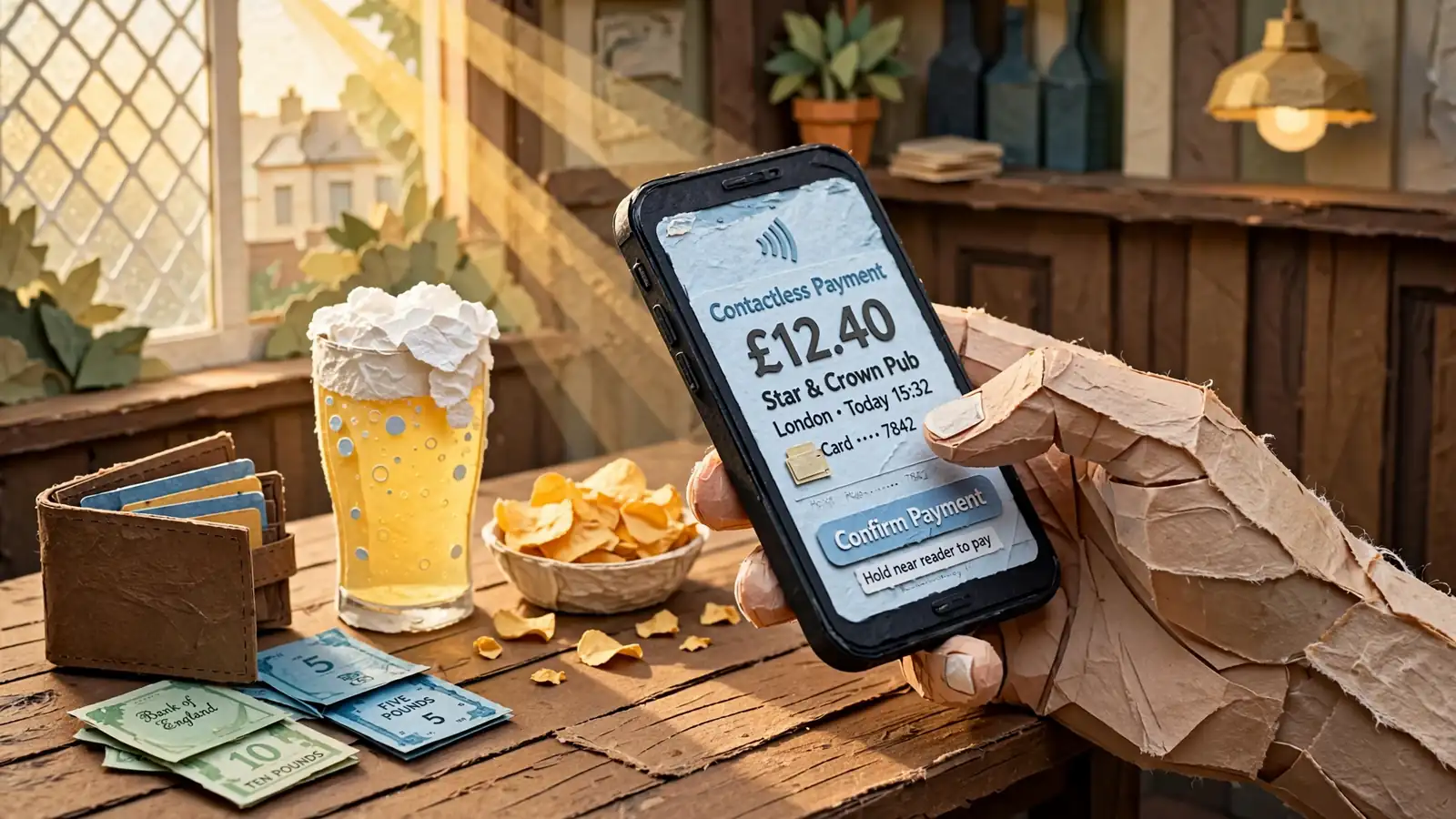
The cashier shows whether Google Pay is enabled for a deposit, while card eligibility, bonuses and withdrawal routes may differ.
Google Pay Availability Is a Cashier Question
A casino can appear to support a familiar payment brand without offering every service associated with it. That distinction matters particularly with Google Pay. A general payments page, an article about the operator, or a row of logos cannot by itself establish that Google Pay is available to a customer in the United Kingdom at the moment a deposit is being made.
The cashier is the operative part of the arrangement. It is where the remote gambling licensee presents the payment methods enabled for the particular account, jurisdiction and transaction. If Google Pay is available, it should appear there as a selectable deposit route, rather than merely being mentioned in a broad description of the site’s banking facilities. If it does not appear, the casino is not offering that route for that transaction, whatever an older page or an attractive payment badge may imply.
This is an unglamorous rule, but payment systems are full of unglamorous rules. A logo promises recognition; a cashier determines access.
Why general payment claims can mislead
Payment information is often written at a level of generality that suits marketing but not a deposit decision. A casino may list cards, wallets and mobile payment services together, even though each one can have separate technical requirements. Availability may depend on the customer’s location, the account’s currency, the device being used, the banking product connected to the wallet, or the casino’s own current configuration.
The distinction is visible even with conventional card brands. A specialist review may list Visa and Mastercard among the payment methods associated with UK-facing casinos, yet the current availability of a particular card product still has to be checked in the cashier. The same principle applies more strongly to a mobile wallet: the existence of a recognised brand elsewhere on a site does not prove that its payment button will be offered at the point of deposit.
Casino Payments in the UK: Methods and Deposits
A page may also remain online after a payment arrangement has changed. A casino can revise its cashier, suspend a method, restrict it to certain accounts or replace one payment pathway with another without every older description changing at the same time. The result is a small but important difference between “this casino discusses payments” and “this account can use Google Pay now”.
That difference is the whole question.
What the cashier can establish
The cashier provides the most relevant confirmation because it connects the method with the account and the intended transaction. A proper check concerns more than the name of the casino. It concerns whether Google Pay is displayed after signing in, whether it is offered for a UK account, and whether it is available for a deposit rather than simply mentioned in an information page.
The payment screen may also show the conditions that accompany the route. These can include the supported account currency, the minimum or maximum permitted for the transaction, and any identity or payment checks required before funds are accepted. Such details belong to the casino’s live payment interface, not to a general assumption about mobile payments.
A device can matter as well. Google Pay is a digital wallet used through compatible devices and services, so a method that appears in one setting may not appear in another. That is not proof that the casino has permanently abandoned it, nor is the reverse proof that it is available to every account. The relevant evidence remains the payment choice presented for the intended deposit.
A cautious sequence is therefore simple:
- Sign in to the casino account.
- Open the deposit cashier.
- Look for Google Pay among the available methods.
- Check that it is offered for the UK account and the intended transaction.
- Confirm the displayed payment conditions before authorising anything.
The purpose is not to turn a deposit into a ceremony. It is to replace a broad claim with a current check.
“Still available” is a live question
Searches for casinos accepting Google Pay often carry an implicit date. Payment availability changes, and the word “still” is doing more work than it first appears. A casino that accepted a mobile wallet previously may not show it in the current cashier. Conversely, a newly configured cashier may present a method that is absent from older reviews.
That is why a list described as the best Google Pay casinos in the UK cannot be treated as a permanent catalogue. Even the description “casinos that accept Google Pay UK 2026” needs a live cashier check behind it. The year identifies the period being considered; it does not freeze an operator’s payment options until December.
The same care applies to claims about bonuses or games. A casino may advertise a promotion or a substantial game collection while the payment method has separate eligibility conditions. Google Pay availability does not, by itself, establish that a particular bonus can be claimed, nor does a list of games prove that the deposit button will be offered. Payment access, promotional terms and casino content are different parts of the account.
Do
- Sign in to the casino account
- Open the deposit cashier
- Look for Google Pay among available methods
- Check for UK account and intended transaction
- Confirm displayed payment conditions
Don’t
- Rely on general marketing descriptions
- Assume a logo implies availability
- Trust older reviews without checking the cashier
- Assume Google Pay is available for all promotions
Google Pay is not the same as every mobile wallet
Mobile payment names are not interchangeable. Some UKGC-licensed casinos accept Apple Pay for deposits, but that fact does not establish Google Pay availability. Apple Pay and Google Pay are separate payment services, with separate integrations and separate buttons in a cashier. One may be present while the other is absent.
Nor does the presence of card brands settle the matter. Visa or Mastercard may be used as the underlying card product in a digital wallet, but the wallet route can still be enabled or disabled independently by the casino and its payment providers. The sensible question is not whether the surrounding financial technology looks similar. It is whether Google Pay itself is displayed and available for the account.
Other payment routes belong to a separate comparison. Cards, bank-based services, prepaid vouchers and e-wallets have their own deposit and withdrawal arrangements, and their presence does not make Google Pay more or less available. The first issue is narrower: whether the named mobile wallet appears in the current UK cashier before the deposit is authorised.
When Google Pay Is Missing, Other Payment Routes Remain
Google Pay is only one possible route into a UK casino account. When it does not appear among the cashier’s options, the practical alternative is not to search for a casino with a more persuasive slogan, but to compare the payment systems that the cashier actually supports. They do not do the same job, and treating them as interchangeable is how small transaction details become large annoyances.
Casinos That Accept iDEAL in the UK: Payment Guide
The main alternatives fall into five groups: debit cards, open banking, bank transfers, prepaid vouchers and e-wallets. Each has a different relationship with the casino, the player’s bank and the later movement of funds. A payment logo is therefore less a promise than a signpost.
Debit cards: the familiar route
UK casinos commonly accept debit cards issued on Visa or Mastercard networks. They remain a straightforward option because the payment begins with an ordinary bank account rather than with a separate wallet or voucher balance. For many customers, that familiarity matters more than novelty: the route is recognisable, and the cashier generally presents it alongside the relevant card brand.
The important distinction is between a debit card and a credit card. UK-licensed casinos cannot accept credit-card payments for gambling, and that restriction also covers credit-card funding routed through a money service business. A card bearing a well-known network logo is not, by that fact alone, eligible for gambling transactions. The product behind it matters.
Card acceptance is also not universal merely because Visa or Mastercard appears on a casino’s general payment page. The available product, customer account and cashier configuration determine what can actually be used. In other words, a card logo describes a category, not a guaranteed personal route. Payment systems have never been famous for their poetry.
Debit cards
UK casinos commonly accept Visa or Mastercard networks. The payment begins with an ordinary bank account.
Open banking and bank transfers
Connects the deposit process with a bank account directly, avoiding separate wallet balances.
Prepaid vouchers
Services like Paysafecard separate the gambling account from a bank card using a deposit-only voucher.
E-wallets
Account-based services like Skrill and Neteller sit between the bank account and the casino.
Open banking and bank transfers
Open banking connects the deposit process with a bank account through an authorised banking service, while a bank transfer moves funds from the account through the banking system. Both avoid the need for a separate prepaid code or e-wallet balance. They can therefore appeal to customers who prefer the bank to remain the visible centre of the transaction.
A specialist review reports that open banking and bank transfers can offer instant deposits and fast withdrawals at many sites. That is a description of changing service arrangements, not a permanent property of every casino. Availability, the banking provider and the operator’s own processing determine the result.
The two routes should not be confused. Open banking may present a direct account-authorisation flow inside the payment journey. A bank transfer can involve entering or confirming the casino’s banking details and allowing the bank to process the payment independently. The casino’s instructions take precedence, particularly where a reference or account identifier is required.
A bank transfer can also be affected by cut-off times, weekends and currency conversion. Those influences belong to the banking route itself rather than to the name printed on the casino’s cashier. The method may look simple, but the banking calendar still has a vote.
Prepaid vouchers
Paysafecard is a prepaid voucher designed for deposits only. It separates the gambling account from a bank card at the point of payment: the voucher carries its own value, which is then entered into the casino cashier.
That separation is the defining feature, not a minor technical detail. A deposit-only voucher is not a complete payment cycle and should not be described as though it were an all-purpose alternative to Google Pay. It serves the funding side and does not provide the same route for receiving money back.
Casinos that accept Giropay in the UK: what to check
Prepaid payment can suit someone who wants to set aside a defined amount before opening the casino cashier. It also means that the voucher’s availability, value and conditions become part of the transaction. The relevant question is not simply whether a casino mentions Paysafecard, but whether the cashier accepts it for the intended account and transaction.
E-wallets
E-wallets sit between the bank account and the casino. Skrill and Neteller are available at some sites, giving customers another way to hold or direct funds without entering card details into the casino’s payment form. They are distinct from prepaid vouchers because an e-wallet is an account-based service rather than a single-use or deposit-only instrument.
A specialist review states that Skrill and Neteller are often excluded from promotions. That condition shows why a payment method cannot be assessed by speed or familiarity alone. The same route may be available for a deposit while being treated differently under a promotion’s payment rules. The cashier and the promotion terms belong to separate checks.
E-wallets also require attention to funding arrangements. UK remote gambling operators cannot accept wallet payments where the wallet permits credit-card funds to be used for gambling. The wallet’s brand is therefore not enough; the way it is funded matters as well. A route that looks indirect does not escape the rules applying to the underlying money.
Choosing among the routes
These alternatives answer different needs. Debit cards use a familiar bank-linked instrument. Open banking and bank transfers keep the transaction close to the bank account. Paysafecard provides a prepaid, deposit-only route. Skrill and Neteller provide account-based e-wallet options where a casino makes them available.
Payment Summary
- The cashier is the only definitive source for payment availability.
- Alternatives like debit cards and e-wallets have different rules and promotional eligibility.
- Deposits and withdrawals are separate processes with different speeds.
The sensible comparison is consequently about function rather than fashion. A customer looking for a replacement for Google Pay may want the same simple deposit experience, but no alternative reproduces every part of a digital-wallet payment. The cashier determines which routes exist; the payment method’s own structure determines what it can do afterwards.
For UK gambling accounts, age verification is required before an operator allows a customer to deposit. Payment availability therefore sits alongside account eligibility and the operator’s checks. A route can be technically familiar yet unavailable to a particular account, or accepted for deposits while carrying separate conditions elsewhere. That is why the alternatives are best understood as categories with different boundaries, not as a league table of supposedly best casino payment methods.
Deposits, Card Eligibility and the First Check
A deposit begins with a rather unglamorous question: is the chosen payment route available to this account at this moment? A casino may display familiar logos in general payment information, while the cashier presents a narrower selection after the customer has logged in. The difference matters. Payment systems are not decorative badges; they are account-level functions.
This is particularly relevant to casinos accepting Google Pay debit cards in the UK. Google Pay may be connected to a debit card, but that does not automatically make the wallet or the underlying card eligible for a particular transaction. The cashier decides what can actually be selected, and the account’s country, currency, verification state and payment profile may all affect that display. A general statement that a site accepts cards, mobile wallets or digital payments is therefore not confirmation that a Google Pay deposit will go through.
The first check belongs inside the cashier. It should establish three things:
- whether Google Pay is shown as an available deposit method;
- whether the linked card is a supported debit-card product;
- whether the account is permitted to use that route.
The same principle applies when the cashier offers Visa or Mastercard. A specialist affiliate review may list those brands among the methods associated with the sites it examined, but that is not a permanent statement about every UK customer or every card product. Current availability and eligibility still need to be checked in the live cashier. Payment pages age quickly; a logo has a longer life than the arrangement behind it.
Card type is not a minor technicality. UK-licensed casinos cannot accept credit-card payments for gambling, and a card stored in a mobile wallet does not escape that rule merely because the wallet provides the visible button. A debit card may therefore be eligible where a credit card is not. The distinction should be settled before the deposit is attempted, rather than after a declined transaction has turned a simple funding step into correspondence with support.
Ownership details deserve the same early attention. The cleanest arrangement is an account registered in one customer’s name alongside a payment route belonging to that same customer. Matching account information and payment ownership reduces the chance that basic identity details create avoidable friction around the transaction. It does not replace KYC or guarantee acceptance, but it removes one ordinary source of confusion: a deposit arriving from an unrelated person, cardholder or account.
That check is especially useful when Google Pay is involved, because the casino may see both the wallet arrangement and the underlying funding card. The name attached to the casino account, the payment profile and the card should not tell three different stories. Digital convenience has not abolished old-fashioned questions about whose money is moving.
First Deposit Check
- Confirm Google Pay is shown in the cashier
- Verify the linked card is a supported debit-card product
- Ensure the account is permitted to use that route
- Check that payment details belong to the account holder
The cashier also shows the minimum amount accepted for the selected route. A specialist affiliate review places the starting deposit range at £10–£20, with the precise threshold depending on the payment method. That figure should be treated as a displayed condition for the relevant route, not as a universal promise made by every casino. A Google Pay deposit may have a different starting point from a debit-card deposit, even where both appear in the same payment area.
This is where phrases such as “no minimum deposit” become misleading. A casino still needs a transaction value to fund the account, and the cashier may impose a method-specific minimum. Promotional language about free spins, bonuses or real-money play does not alter the mechanics of opening a balance. A reward headline cannot turn an unavailable payment route into an available one.
Before confirming the deposit, the sensible sequence is short: sign in, open the cashier, select the intended method, inspect the accepted card or wallet, confirm the minimum shown for that route, and check that the payment details belong to the account holder. Only then does the question move from advertising language to an actual transaction. That is the useful first check.
Mobile Slots Still Have British Rules
A phone changes the screen, not the legal character of a slot. Whether a game is opened through a mobile browser or an app, and whether the deposit button is connected to Google Pay or another cashier option, the rules governing online slot play in Britain remain the same. A payment brand is not a second rulebook.
Casinos That Accept AstroPay in the UK: How to Check
That matters because mobile searches often blend three separate ideas: finding a slot, funding an account and playing for money. The first may happen on a small screen; the second may involve a digital wallet; the third is still remote gambling when real money is at stake. The route by which funds arrive does not turn a regulated slot into a different kind of game.
No autoplay on British online slots
Autoplay is not permitted for online slots in Britain. A game cannot be set to continue spinning automatically while the player watches, looks away or does something else. Each spin must be started as an individual action.
The restriction is easy to miss when a mobile interface is designed to make everything feel continuous. A bright button, a quick animation and a payment wallet that opens with a fingerprint can create the impression of one seamless transaction. The law is less impressionistic. Depositing and spinning are separate events, and the spin cannot be handed over to an automatic sequence.
This applies regardless of whether the account was funded through Google Pay, a card or another payment route. It also applies when the game is marketed in mobile language, presented as a slot machine or described in terms of rapid play. Packaging changes more readily than regulation.
Every spin needs time to finish
British online slot spins must last at least 2.5 seconds. The minimum applies to the spin itself, not merely to the time spent deciding whether to press the button. A faster connection or a more responsive handset does not authorise a quicker cycle.
That rule gives the play a deliberately measured rhythm. It stands in contrast to the expectations created by mobile technology, where pages load instantly and a stored payment method can remove several stages from a transaction. The convenience of the payment mechanism therefore ends at the cashier. It cannot compress the game cycle.
British Rules
Autoplay is strictly prohibited for online slots in Britain. Each spin must be started as an individual action.
The same principle applies to slots played for real money and to any mobile presentation of those games. Calling a title “instant”, placing it behind a digital-wallet button or displaying it as a familiar machine does not exempt it from British requirements. Nor does using a payment method associated with a phone make the activity a casual app rather than gambling.
For this reason, the sensible distinction is between the payment screen and the play screen. Google Pay may be relevant to how an account is funded where the cashier offers it, but it does not decide how a slot operates. Autoplay remains banned, and each spin must meet the minimum duration. The phone is modern; the rule is firm.
Real-Money Play and the Route Back Out
Real-money slot play creates a second question after the winning spin: how can the money leave the casino account? A payment method that appears suitable for funding play is not automatically a route for receiving a payout. This matters especially when searches combine Google Pay with phrases such as “slots for real money” or “Google Pay slots app”. The presence of Google Pay at the payment stage does not, by itself, establish that winnings will be sent back through Google Pay.
UK anti-money-laundering controls commonly connect a payout with the payment source used for the account. The purpose is not decorative bureaucracy. Returning funds to the original source helps remote gambling licensees check where money came from and where it is going. It is also part of the wider closed-loop approach to gambling transactions: the payment trail should not become an anonymous side road.
Casinos That Accept Entropay UK: Availability Explained
That can make the route out less flexible than the route in. A casino may ask for a withdrawal to be returned to the same payment account, or may apply another method after checking the transaction history. The cashier’s available withdrawal options therefore matter separately from the method shown when money was added. A Google Pay deposit should not be treated as proof that Google Pay will handle the payout.
Why the first withdrawal can take longer
The first request to withdraw winnings may involve more checking than later requests. The casino can need to complete KYC, confirm account details and establish that the payment source belongs to the account holder. Any mismatch can lead to requests for further information before the withdrawal is approved.
A specialist review identifies internal casino approval and account verification as important influences on withdrawal speed. That is a description of how the process may work, not a fixed delivery promise. The casino’s own checks come before the payment provider’s part of the transaction, so a fast-looking payment label does not remove the approval stage.
The same specialist review also links withdrawal speed to whether the account is fully verified. An incomplete verification process can hold up a request even when the slot play itself has finished and the balance is available for withdrawal. This is why the real-money part of a Google Pay slots experience cannot be judged only by the ease of starting a game.
There is a practical distinction between a balance being eligible for withdrawal and money reaching a bank or payment account. The casino must first authorise the request, apply its anti-money-laundering controls and confirm the account information. Only then does the receiving payment route complete its part.
“Won” is not the same as “received”.
Withdrawal Reality
Returning funds to the original source is a standard part of anti-money-laundering controls. A Google Pay deposit does not guarantee that winnings will be returned via the same method.
Debit Cards, Credit Cards and the Deposit–Withdrawal Gap
For UK-licensed casinos, the distinction between a debit card and a credit card is not a minor cashier preference. Credit-card payments for gambling have been banned since 14 April 2020, and that restriction has not been relaxed. A casino serving British customers cannot accept a credit card directly, nor can it accept credit-card funding routed through a money service business.
That principle also matters when Google Pay appears in the payment chain. Google Pay is a digital wallet, not a way to turn a prohibited credit-funded transaction into an acceptable one. If the underlying card is a credit card, the payment may still fall within the restriction on credit-card gambling. A debit card linked to a supported wallet is a different matter, but the casino’s cashier and the wallet’s funding rules determine whether the transaction can proceed.
Debit-card deposits can be swift. A specialist review describes card funding as potentially instant, while the corresponding withdrawal may take several business days. The two movements pass through different procedures: a deposit is an authorisation to add funds, whereas a payout is a controlled release of money from the gambling account. Treating them as mirror images is how the cashier acquires its small, unpleasant surprise.
A fast deposit therefore says little about the speed of a withdrawal. The casino may need to approve the request, apply its closed-loop rules and complete KYC before money leaves the account. A debit card may be listed for both directions, yet the withdrawal still depends on the casino’s process and the payment infrastructure connected to that card.
Casinos That Accept Solana in the UK: Evidence
Some debit cards are linked to systems designed for faster payouts. PayPal, open banking services and debit cards connected to fast payout systems are identified in a specialist review as being among the quicker withdrawal routes. That is a description of a payment arrangement, not a promise that every casino will process a payout immediately. The casino must support the relevant withdrawal route, and account checks can remain decisive.
This is why phrases such as “instant banking” or “direct withdrawal” need careful reading. They may describe how funds enter an account, how a payout is delivered, or simply a label used by a cashier. They do not erase the difference between a debit-card deposit and a withdrawal request. Nor does a Google Pay deposit imply that winnings can be returned to Google Pay or to the same underlying card. The available payout destination is set by the casino’s payment rules and the applicable controls, not by the speed of the initial tap.
Bonuses Depend on the Payment Method
A payment method can decide whether a promotion applies, even when the deposit itself is accepted. That distinction matters for Google Pay casino bonuses in the UK. A cashier may process a Google Pay deposit while the accompanying welcome offer, slots promotion or bonus code remains unavailable to that payment route. Acceptance and eligibility are separate decisions, made in rather less romantic language than the advertising often uses.
The promotional terms are therefore more important than a banner promising a welcome bonus. They should identify:
- which deposit methods qualify;
- whether the payment must be made in a particular way;
- whether a wallet or mobile payment is excluded;
- whether the offer applies to a first deposit, later deposits or both;
- what happens when a qualifying and non-qualifying method are used on the same account.
Google Pay may sit between a bank card and a digital wallet in the cashier, but that label does not settle its promotional treatment. The relevant wording is the operator’s current offer documentation. A deposit made through Google Pay should not be assumed to unlock a bonus simply because the underlying card might have qualified when entered directly.
PayPal illustrates the same separation. It is valued for speed and convenience, yet a specialist affiliate review notes that PayPal deposits may be excluded from bonus eligibility. That observation is not a standing rule for every UK casino; promotion conditions belong to the individual operator and can change. The payment screen and the offer’s full terms must be read together.
Skrill and Neteller require the same care. They are available at some sites, while a specialist affiliate review reports that these e-wallets are often excluded from promotions. “Often” in that report describes the reviewed promotional landscape, not a universal condition. A cashier can accept an e-wallet while the bonus system refuses to attach promotional funds to the transaction.
Bonus Eligibility
Attention A deposit made through Google Pay may not automatically unlock a welcome bonus if the specific payment route is excluded from the promotion’s terms.
This is particularly relevant to searches for Google Pay slots with a welcome bonus, a no-deposit bonus or a code. The payment brand does not create a right to promotional play, and a code does not override an exclusion written into the terms. Where the method is excluded, the account may receive no bonus funds even though the deposit reaches the casino successfully.
The cleanest check is a three-way comparison: the payment option shown in the cashier, the eligibility wording attached to the promotion and any exclusions in the full terms. If those details do not align, the deposit should be treated as an ordinary real-money transaction. No bonus attached.
Minimum Deposits and the Limits Set Before Play
A Google Pay deposit is not defined by the phone, the wallet or the word “instant” alone. The cashier determines which minimum applies when the transaction is actually set up. A specialist review places the starting deposit for the payment methods it examined at £10–£20, with the exact figure dependent on the selected route. That gives some context to searches for a £5 Google Pay deposit, but it does not establish that a particular casino, wallet arrangement or mobile cashier will accept that amount.
Casinos That Accept POLi in the UK: Check the Cashier
The distinction matters because a payment method can be available while carrying its own threshold. A casino may display several deposit routes, yet attach different minimums to each one. Google Pay, where offered, may therefore have a different starting amount from a debit-card route or another digital payment option. The relevant figure is the one shown in the cashier for the account and method in use, not a general number copied from a comparison page.
The same principle applies at the upper end. A specialist review reports that maximum deposits can be set per transaction, per day or per month, and that these ceilings vary according to both the payment method and the account’s status. A mobile payment route may therefore have a separate cap from another route, while an account with a different status may be subject to different controls. The label “unlimited” would be a curious thing to trust in a cashier.
These payment thresholds sit alongside a separate protection required by the UK Gambling Commission. Before a new customer makes the first deposit, the remote gambling operator must present an opportunity to set a financial limit. This is not the same as a Google Pay minimum: one governs the amount accepted by a payment route, while the other lets the customer define a boundary for gambling expenditure.
Deposit Limits
Financial limits are different from payment method minimums. While a cashier might require a £10 minimum for Google Pay, the UKGC requires operators to provide tools for customers to set their own personal spending boundaries.
The control must remain usable after registration. UKGC rules require account-level limit tools to be accessible, so the financial boundary is not merely a one-time prompt hidden before the first transaction. Deposit thresholds describe what the cashier will process; financial limits describe the amount the account holder has chosen to place within bounds. Two different gates.
Comparing Alternatives by Cost, Not by Label
A payment method can look inexpensive while passing costs through another part of the transaction. The visible cashier fee is only one piece of the calculation. A casino may charge for a particular route, while the payment provider, card issuer or bank adds its own charge. Network costs can also enter the total, especially where a transaction crosses systems or currencies.
This makes labels such as “wallet”, “bank transfer” or “Google Pay alternative” poor guides to value. The same route can carry different costs at different casinos, and the fee structure may depend on the payment provider or account. A specialist review identifies the relevant categories as casino charges, provider fees, issuer or bank fees, exchange-rate spread and network cost. Each belongs in the comparison.
Casinos That Accept Monzo in the UK: Payment Guide
Currency deserves particular attention. An account may support pounds sterling, yet the payment account or card can be denominated differently. Conversion then becomes part of the transaction rather than a footnote. The exchange-rate spread is the difference between the market rate and the rate applied to the payment. It can cost more than a clearly displayed flat fee, which is a rather efficient way for a small charge to hide.
The practical comparison is therefore tied to the amount being moved. A route with no stated casino fee is not automatically the cheapest if its provider applies a charge or its currency conversion is unfavourable. Conversely, a visible fee does not settle the question without knowing what the bank, issuer and network will add.
There is no single lowest-cost method for every UK casino transaction. The sensible measure is the combined cost for the actual amount, account currency and payment route, not the reputation of the label. Before a transaction, the cashier’s fee information and the account’s currency should be read together. GBP may be available, but the account currency still needs confirmation before funds move; otherwise a payment intended to be tidy can acquire an unwanted conversion along the way.
Casinos That Accept Click2Pay in the UK
Google Pay Does Not Change a Casino’s GamStop Status
Google Pay is a payment route, not a regulatory category. Its presence in a casino cashier cannot show whether the site is connected to GamStop, outside the scheme, or suitable for someone who has chosen self-exclusion. A digital wallet may make the deposit screen look different; it does not rewrite the operator’s obligations.
GamStop concerns a person’s access to participating gambling services. Payment availability concerns how money may be moved into an account. Those are separate questions, even when they appear beside each other during registration or at the cashier. A casino offering Google Pay is not thereby a “non-GamStop” casino, and a casino without it is not thereby part of GamStop.
The legal position for Britain rests on the operator’s status, not on the logo displayed among payment buttons. Remote gambling licensees selling into the British market must hold a Gambling Commission licence. UKGC-licensed casinos must provide self-exclusion tools, and GamStop is part of the wider conversation around restricting access to gambling accounts. The payment method cannot override an active exclusion or turn an unsuitable account into a suitable one.
This matters particularly when a search for Google Pay is really an attempt to find a route around a previous decision to stop gambling. Looking for a different wallet, card, or cashier does not remove the reason for that decision. Nor does the phrase “not on GamStop” establish that a site is safe, licensed, or appropriate. An offshore casino operates outside the UKGC regulatory system; its payment options still say nothing reliable about the protection available.
The sensible order is therefore deliberately unglamorous: treat Google Pay as a transaction detail, and assess self-exclusion and licensing separately. A current licence can be checked on the UK Gambling Commission’s public register, while self-exclusion should be respected rather than tested through another payment channel.
A wallet is not a loophole.
What is the fastest withdrawal method for UK casinos?
PayPal, open banking services and debit cards linked to fast payout systems are generally among the quickest options. The casino’s approval process and whether your account is verified also affect how soon you receive the money.
Why must withdrawals return to the deposit method?
Returning funds to the original payment source is a common anti-fraud and anti-money-laundering control. Using the same account consistently can also reduce avoidable transaction checks.
Do UK casino withdrawals require verification?
Verification may need to be completed before a withdrawal, and first withdrawals can take longer while checks are carried out.
Are Visa and Mastercard deposits definitely debit cards?
No. The Visa or Mastercard brand alone does not confirm that a particular card product is eligible; check the casino cashier for the current options for your account.
Can I use a credit card at 333 Casino in Great Britain?
No. Credit-card gambling has been banned for UK customers since 14 April 2020, and the ban remains in force.
Best casino sites in the UK
- BeOnBetBonus: 100% up to €500 + 100 FS · Payout speed: 1-3 business days
- NightLuckBonus: Welcome Pack + 805% Up To 6400€ + 280 FS · Payout speed: 1-3 business days
- AmunbetBonus: Join now and get 450% up to 2,700 GBP + 450 FS · Payout speed: 1-3 business days
- JetsetspinsBonus: 200% Bonus + 100 Free Spins + Free Royal Wheel · Payout speed: 1-3 business days
- x3betBonus: Welcome Pack 100% Up to £1.000 + 200 Free Spins · Payout speed: 1-3 business days
- SpinFormulaBonus: 550% Up To £15,000 + 550 FS · Payout speed: 1-3 business days
- EvoSpinBonus: 125% up to €2500 + 125 Free Spins · Payout speed: 1-3 business days
- ChanzeBonus: Slots Welcome Bonus #1 200% up to €500 · Payout speed: 1-3 business days
- SlotoSportBonus: 500% up to £ 10 200+ 777 FS · Payout speed: 1-3 business days
- Revery PlayBonus: 100% up to€1,000+ 100 FS · Payout speed: 1-3 business days