

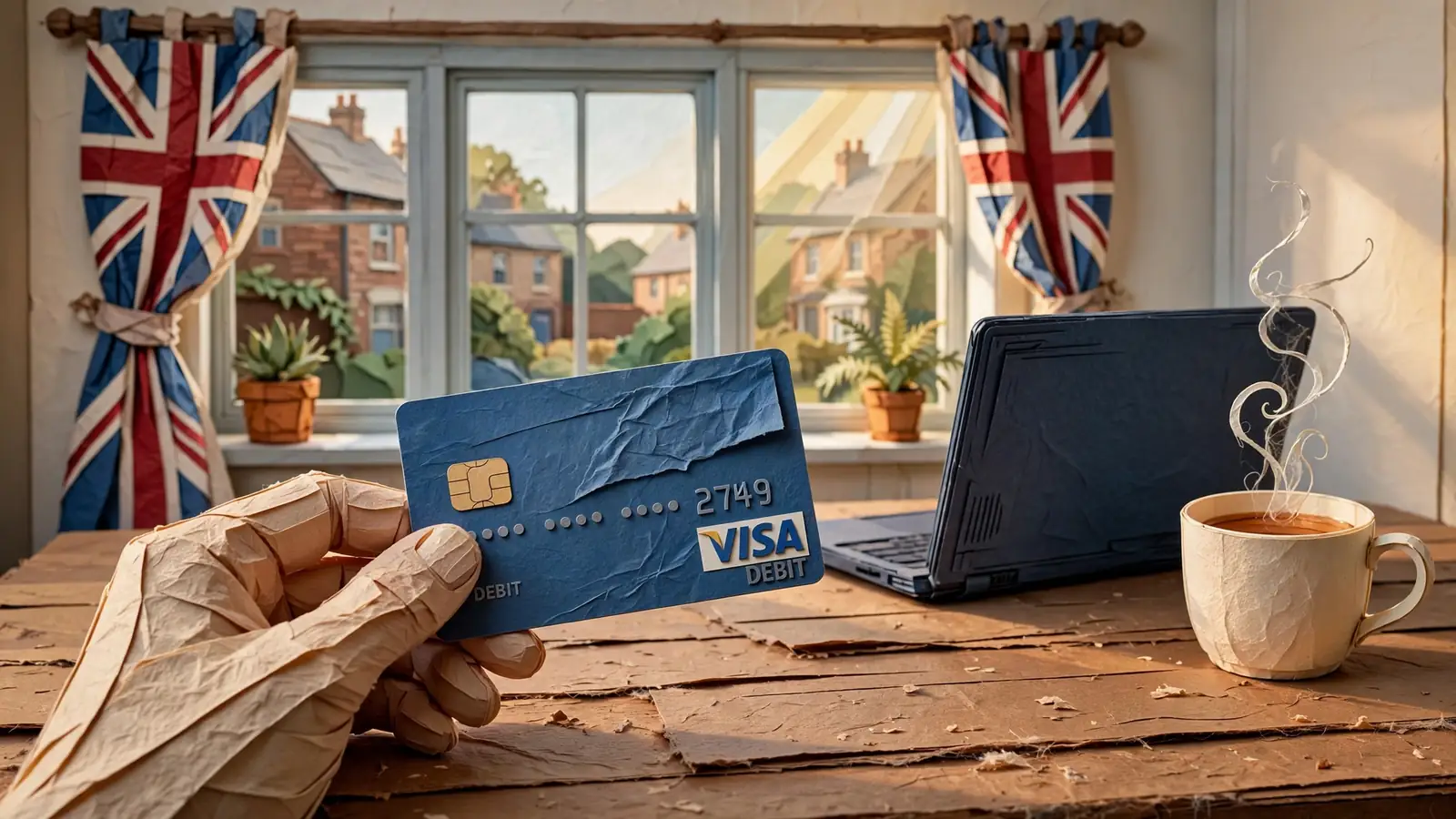
Visa acceptance depends on the cashier, card type and account options, while withdrawals and bonus rules may add further conditions.
Visa in the UK Casino Cashier: What Acceptance Means
Visa remains a familiar sight in the payment section of UK casino websites, but the word itself does not tell the whole story. The relevant distinction is between a Visa debit card and a Visa credit card. UK casinos commonly support debit cards, with Visa and Mastercard among the card brands that appear in casino cashiers. That makes Visa debit a practical deposit route at many sites serving the British market.
“Many” is doing important work here. A payment logo is not a permanent national guarantee, nor does it mean that every card carrying the logo will be accepted. A casino can change its available methods, and a particular card product may be treated differently from another. The cashier is therefore the decisive place to check whether Visa is available for the account and whether the relevant card can be used.
That small piece of interface has more authority than a banner promising a smooth payment experience. The cashier shows the methods currently enabled for the site, the account and, where relevant, the card type. A specialist affiliate review may describe Visa as available at a group of UK casinos, but such a description remains a guide rather than a live payment confirmation. Availability changes; the cashier is where the present position is displayed.
Visa debit and casino deposits
For a UK player looking for casinos that accept Visa, the useful question is not simply whether a site displays the Visa symbol. It is whether the cashier accepts a Visa debit card for a gambling deposit. Debit cards draw on funds already held in the associated bank account, which is why they sit within the card-payment options commonly offered by UK casinos.
Casino Payments in the UK: Methods and Deposits · Casinos That Accept Instadebit in the UK: What to Check
The process is generally presented in a plain sequence: the account holder opens the deposit area, selects Visa if it appears, enters the requested card details and confirms the transaction through the bank’s security checks. The precise screens belong to the casino and the card issuer, so the presence of the Visa brand remains only the beginning of the assessment.
This is also why lists described as the best Visa casinos in the UK should be read with some care. “Visa casino” is a shorthand for a casino whose cashier supports a qualifying Visa payment route, not a separate category of casino, game or bonus. The same applies to descriptions of new Visa casinos, Visa casino sites or casinos offering Visa deposits: the meaningful detail is the live availability of an eligible debit-card option.
A site may display Visa alongside Mastercard, while the usable choice still depends on the card product and the cashier’s current configuration. A card can carry a recognised network mark and nevertheless fail to qualify for the transaction being attempted. The brand identifies the payment network; it does not settle every question about the card itself.
Why Visa credit cards are different
The position changes completely where the card is a credit card. The UK regulator banned credit-card gambling on 14 April 2020, and that prohibition has not been relaxed. UK casinos cannot accept credit-card payments for gambling deposits.
This is not a minor cashier preference or an occasional restriction imposed by one operator. It is a market-wide rule for gambling deposits at UK-licensed casinos. A Visa credit card therefore cannot be used merely because Visa debit cards are accepted at the same site. The shared logo does not overcome the different funding source.
The distinction matters because everyday language often compresses both products into the word “Visa”. In a search for Visa casinos in Britain, that shorthand can make a debit-card route sound broader than it is. The legally relevant description is narrower: Visa debit may be accepted, while Visa credit may not be used to fund gambling.
Prohibition
UK casinos cannot accept credit-card payments for gambling deposits. This is a market-wide rule for all UK-licensed casinos.
Nor does changing the route disguise the nature of the card. Credit-card funding routed through a money service business is also barred. The rule is concerned with credit-card payments for gambling, rather than with the visual form in which the payment reaches the casino.
What the cashier can and cannot confirm
A cashier can show whether Visa is currently offered and whether the account is presented with an eligible card option. It cannot turn an unsupported card product into a supported one, and an attractive payment-method page elsewhere on the site should not be treated as more current than the deposit screen.
The sensible reading of “accepts Visa” is therefore precise:
- the casino has a Visa payment option visible in its cashier;
- the card is a debit card rather than a credit card;
- the particular card product is eligible for that transaction;
- the payment remains subject to the card issuer’s own approval.
That is less glamorous than a list of “best Visa casinos and bonuses”, but it is considerably more useful. Payment branding is a promise of recognition, not a promise that every plastic rectangle will pass. The cashier supplies the final punctuation.
Best casino sites in the UK
- BeOnBetBonus: 100% up to €500 + 100 FS · Payout speed: 1-3 business days
- NightLuckBonus: Welcome Pack + 805% Up To 6400€ + 280 FS · Payout speed: 1-3 business days
- AmunbetBonus: Join now and get 450% up to 2,700 GBP + 450 FS · Payout speed: 1-3 business days
- JetsetspinsBonus: 200% Bonus + 100 Free Spins + Free Royal Wheel · Payout speed: 1-3 business days
- x3betBonus: Welcome Pack 100% Up to £1.000 + 200 Free Spins · Payout speed: 1-3 business days
- SpinFormulaBonus: 550% Up To £15,000 + 550 FS · Payout speed: 1-3 business days
- EvoSpinBonus: 125% up to €2500 + 125 Free Spins · Payout speed: 1-3 business days
- ChanzeBonus: Slots Welcome Bonus #1 200% up to €500 · Payout speed: 1-3 business days
- SlotoSportBonus: 500% up to £ 10 200+ 777 FS · Payout speed: 1-3 business days
- Revery PlayBonus: 100% up to€1,000+ 100 FS · Payout speed: 1-3 business days
When Visa Is Not an Option: Other Ways to Pay
A casino cashier is less a single doorway than a row of doors, each leading to a slightly different arrangement. When Visa is unavailable, unsuitable or simply absent from the payment menu, the alternatives are not interchangeable. Some move money directly from a bank account, some place an intermediary wallet between the bank and the casino, and one familiar option arrives as a voucher that stops at the deposit stage.
The practical comparison is therefore not only about speed. It concerns whether the method can be used for withdrawals, whether a promotion recognises the deposit, and whether the payment account belongs clearly to the same person as the gambling account. Convenience has paperwork hiding behind it.
Bank transfers and open banking
Bank transfer is the most direct alternative to a card. Open-banking services take the same basic idea and make it part of the cashier, allowing a payment to be authorised through a bank account rather than by entering card details. A specialist review reports that these routes can produce immediate deposits and quick withdrawals at many sites, though the cashier remains the place where availability is established.
That distinction matters. A bank transfer listed as a deposit route is not automatically a withdrawal route, and a payment button displayed by one remote gambling licensee may not appear at another. The name of the method is only the beginning; the deposit and withdrawal columns need to be read separately.
Casinos That Accept WebMoney in the UK: Payment Guide · Casinos That Accept AstroPay in the UK: How to Check
Bank transfers also preserve a fairly plain chain of ownership. The account at the bank, the casino account and the payment details are easier to relate when they are held by the same customer. That can reduce avoidable questions around a transaction. It is an unglamorous advantage, but financial systems have always rewarded tidy paperwork more reliably than enthusiasm.
The timing of a bank payment can also depend on cut-off times, weekends and currency conversion. A route that looks immediate in the cashier may therefore encounter practical delays outside the casino itself. This is not an argument against bank payments; it is a reminder that a payment method has an operating timetable, not merely a button.
E-wallets: PayPal, Skrill and Neteller
E-wallets separate the casino from the bank account. PayPal is valued for speed and convenience, according to a specialist review, but that same review notes that a PayPal deposit may not qualify for a promotion. The method can therefore be attractive for the transaction while being less attractive where bonus terms matter.
Skrill and Neteller occupy a similar part of the payment landscape. They are offered by some sites, rather than being universal cashier features, and a specialist review reports that deposits made through them are often left outside promotional eligibility. Skrill is also described in specialist reviews as one of the more common deposit methods at UK-friendly casino sites in 2026. That is a description of the market at a particular point, not a permanent promise that every cashier will display it.
E-wallets
An e-wallet acts as an extra account between the bank and the casino. It must be available to the casino and owned by the same customer.
The important difference between an e-wallet and a bank route is the extra account in the middle. The wallet must be available to the casino, properly funded and owned by the same customer. UK remote gambling operators cannot accept wallet payments where the wallet permits credit-card funds to be used for gambling. In other words, an e-wallet is not a way to disguise a prohibited credit-card payment. The route still has to comply with the rules governing credit-card payments for gambling.
PayPal, Skrill and Neteller should therefore be treated as distinct cashier options, not as one universal category. A site may offer one and omit the others. A method may support deposits without supporting withdrawals, or its promotional treatment may differ from that of a bank payment. The cashier’s terms decide the details.
Prepaid vouchers and deposit-only routes
Paysafecard belongs to a different family. It is a prepaid voucher intended for deposits only. Money can be placed into the gambling account through the voucher, but the voucher is not a general route for receiving a withdrawal. That makes it useful for funding without exposing bank-card details at the cashier, while also making it unsuitable as a complete payment cycle.
Casinos That Accept Interac in the UK: What to Check
The phrase deposit-only deserves attention because it is easy to overlook. A payment method can work perfectly at the moment money enters an account and still have no role when funds leave it. Anyone comparing alternatives to Visa should separate “accepted for deposits” from “available for withdrawals”; otherwise a convenient first step can become an administrative dead end later.
Less common names in the cashier
Payz may appear under an older name in discussions of casino payments. EcoPayz changed its name to Payz in 2022, so the two names refer to the same rebranded service rather than two separate alternatives. Historical articles can consequently make the payment landscape look more crowded than it is.
Jeton is another less widespread possibility. A specialist review records its continued presence at a handful of UK online casinos in 2026. That wording is deliberately narrow: Jeton is an option at selected sites, not a payment method that can be assumed across the market.
Apple Pay
Available at some UK Gambling Commission-licensed casinos for deposits.
Jeton
An option at selected sites, rather than a method assumed across the entire market.
Payz
The current name of the service formerly known as EcoPayz.
Apple Pay also appears at some UK Gambling Commission-licensed casinos for deposits. Its presence is therefore site-specific, like the other named methods, and it should be checked in the cashier rather than inferred from the casino’s general reputation or from the appearance of a familiar payment logo.
Comparing the routes
| Payment route | Main distinction |
|---|---|
| Bank transfer or open banking | Direct bank-account route; a specialist review associates it with immediate deposits and quick withdrawals at many sites |
| PayPal | E-wallet noted for speed and convenience; promotional eligibility may be restricted |
| Skrill or Neteller | Available at some sites; a specialist review reports frequent exclusion from promotions |
| Paysafecard | Prepaid and deposit-only |
| Payz | Current name of the service formerly known as EcoPayz |
| Jeton | Reported by a specialist review at a handful of UK casinos in 2026 |
| Apple Pay | Accepted for deposits at some UK Gambling Commission-licensed casinos |
The most suitable alternative depends on what the cashier actually supports and on whether the route covers the whole intended transaction. A bank account may offer a straightforward ownership trail; an e-wallet may provide a separate layer between the casino and the bank; a voucher may keep its usefulness strictly on the way in. None of those characteristics makes one method universally best. Payment systems dislike universal answers.
Deposits, Withdrawals and the Return-to-Source Rule
A Visa deposit creates an expectation that the same card will carry the money back. Payment systems are less sentimental. At UK casinos accepting Visa debit cards, the route used to fund an account and the route available for a withdrawal may not be identical, even when both appear in the cashier.
The reason lies in the return-to-source principle. UK anti-money-laundering controls generally require a payout to be sent back through the original payment source, or to follow a route that the remote gambling licensee can connect clearly to that source. This is also an anti-fraud measure: a casino should not become a convenient interchange for money moving between unrelated people, cards and accounts.
A Visa deposit therefore does not automatically mean that Visa will be offered as the payout destination. The cashier may return the deposited amount to the card where that route is supported, while directing eligible winnings through another withdrawal method. The exact arrangement depends on the casino, the card product and the payment provider. The cashier is the operational document; general claims that a site accepts Visa say less than the options displayed inside the account.
Casinos That Accept Solana in the UK: Evidence · Casinos That Accept Wirecard in the UK: Payment Guide
That distinction matters when comparing online casinos accepting Visa debit cards in the UK. Card acceptance describes the funding stage. It does not promise a matching withdrawal facility. A casino may accept a Visa debit card for a deposit but handle the later payout through a bank transfer or another approved route. Such a change is not necessarily an error or an attempt to make the money difficult to reach. It can be the result of closed-loop rules and the provider’s own settlement arrangements.
Why ownership details matter
The cleanest path is often a single named account used consistently for both deposit and withdrawal. The account holder, the casino profile and the payment instrument should belong to the same customer. When those basic details align, there is less scope for a transaction to pause over questions that have nothing to do with the gambling balance itself.
A mismatch can take many forms: a payment card in another person’s name, an account registered with one set of details and a withdrawal requested through another, or a payment route whose ownership cannot be established readily. None of these situations proves wrongdoing. They do, however, give the casino a reason to seek further evidence before releasing funds. Financial systems have a talent for turning a small inconsistency into a file.
Returning funds to the original source is therefore not merely a technical preference. It is a way of checking that the person who supplied the money is the person receiving it. Where an alternative withdrawal method is necessary, additional verification may be required to establish that the destination belongs to the same customer.
What the Visa route does and does not establish
The presence of Visa in a casino cashier confirms only that a particular Visa route is available for the transaction being considered. It does not establish that every Visa card product is eligible, that the card will be used for withdrawals, or that a different payment route can be substituted without checks. These are separate questions, despite being compressed into the simple phrase “Visa accepted”.
Return-to-Source
The route used to fund an account may not be the same route available for a withdrawal.
For someone assessing whether Visa is still accepted by UK casinos, the sensible reading is practical rather than absolute: Visa debit funding remains a possible route where the cashier lists it, but the eventual payout must be understood as a controlled movement of funds, not a mirror image of the deposit. The account’s registered details and the payment method’s ownership should remain consistent from the beginning.
That is the quiet logic behind the rule. The deposit opens the trail; the withdrawal has to follow it.
Visa on Mobile: The Cashier, Not the Slot, Sets the Terms
A phone does not create a separate class of “Visa slots”. Visa is a payment method, while the slot is the game selected after an account has been funded. Phrases such as Visa mobile slots UK, Visa payment slots or online slots machines with Visa are understandable shorthand, but they combine two different parts of the casino: the cashier and the games lobby.
Casinos That Accept UKash in the UK: What to Check
The useful question is therefore not whether a particular slot “takes Visa”. It is whether the casino’s mobile cashier shows Visa as an available deposit method and accepts the particular card product being used. A specialist review can list Visa and Mastercard among the methods displayed by the sites it examines, but that list is not a permanent promise of access. Payment arrangements change, and the cashier remains the working test.
What to check on a phone
The mobile cashier should be treated as a live status panel rather than decoration on a payments page. Several details matter:
- whether Visa appears among the available deposit methods;
- whether the card is a debit card rather than a prohibited credit-card payment for gambling;
- whether the casino accepts that card product in the UK;
- whether the account has passed the checks required before a deposit is enabled;
- whether the displayed route is actually available on the mobile version of the site.
A casino may display Visa in general payment information while the mobile cashier presents a narrower selection. The reverse can also occur when a mobile payment interface includes a method that is not prominent elsewhere. That is why an old list of “online slots with Visa” is weaker evidence than the current cashier attached to the account.
Browser, app and mobile wallet distinctions
The device is not the same thing as the payment route. A phone can open a casino through a mobile browser or an application, but neither format turns an unsupported card into a supported one. The relevant question remains whether the cashier recognises the card and permits the transaction.
Where a mobile wallet is shown, it should be considered separately from a card entry. Apple Pay is accepted for deposits at some UK Gambling Commission-licensed casinos, but its presence at one site does not establish availability across the market. The cashier must identify the method offered and the conditions attached to it.
The same caution applies to searches for free Visa slots. “Free” describes the way a game is played, not a Visa payment facility, and Visa acceptance says nothing about whether a casino’s free-play mode exists. Nor does the phrase “real-money slots using Visa” establish legitimacy. Legitimacy belongs to the operator’s legal status and account arrangements; card branding alone cannot supply it.
Mobile Cashier
The mobile cashier is a live status panel that determines which deposit methods are currently available for your account.
It is the working test for whether a method like Visa is actually accessible on your device.
On mobile, the clean distinction is almost unfashionably simple: the game lobby determines what can be played, while the cashier determines whether Visa can fund the account. Two rooms, one screen.
Real-Money Slot Play and the Gap Between Deposit and Payout
Playing slots for real money with Visa involves two separate stages that are easy to treat as one. The first is putting funds into the casino account. The second is receiving any balance that remains after play, including winnings. Visa may be involved in the first stage without determining how quickly money returns.
A Visa deposit can be credited instantly, allowing the balance to become available for real-money slot play without a noticeable wait. That speed belongs to the payment authorisation and the casino cashier. It does not mean that a later withdrawal will travel through the same process at the same pace. A specialist review describes the difference plainly: the card payment may arrive immediately, while the payout can take several business days.
The slot does not control either transaction. It records the stake and the result inside the gambling account; the cashier handles the movement of money into and out of that account. Thus, a page describing slots that accept Visa is really describing a funding route for the casino balance, not a special class of “Visa slot” or a machine with its own Visa payout system. The terminology is commercial shorthand. The reels remain indifferent to the logo on the card.
What the timing means in practice
A real-money Visa deposit is the point at which available funds are added to the account. Once those funds are used for slot play, the account balance reflects the result of the games. A request to withdraw is a different transaction, even when it concerns money originally deposited by the same card.
Casinos That Accept USDC in the UK: What to Check
This explains why a rapid start can be followed by a slower payout. The deposit has already passed through the card payment route, whereas the withdrawal must be handled as a separate request. The two events should therefore be judged independently rather than as opposite ends of one instant transfer.
The distinction also matters for searches such as “Visa slots games” or “slots using Visa”. The relevant question is not whether a particular game accepts a card. Games do not open their own card accounts. The relevant question is whether the casino account can be funded through Visa and whether the balance can then be used for real-money slot play.
A “no-deposit” phrase describes a different arrangement from paying with Visa: no card deposit is being made at that moment. It should not be folded into the ordinary meaning of Visa-funded play. Equally, free-play language does not turn a card deposit into an instant withdrawal route.
The cleanest description is simple: Visa can provide immediate access to deposited funds, while the payout belongs to a separate timetable. Fast entry, slower exit.
Visa Deposits and Casino Withdrawal Processing
A Visa deposit and a casino withdrawal pass through different stages. The first records money arriving in the gambling account; the second asks the remote gambling licensee to approve a payment leaving it. A Visa debit deposit can therefore appear in the balance before a withdrawal request has completed its checks. The cashier may call the route a direct withdrawal, but that label does not remove the operator’s approval process.
Do
- Check the live cashier for current availability
- Ensure the card is a debit card
- Verify that ownership details match your casino account
Don’t
- Assume a banner or logo is a guarantee of acceptance
- Use a credit card for gambling deposits
- Rely on old lists of supported payment methods
A specialist affiliate review describes withdrawal speed as dependent on two practical matters: the casino’s internal handling of the request and the state of the account’s verification. The payment method matters, but it is not the whole timetable. The casino must first examine the request against the account details and complete any outstanding KYC work. Until that stage is finished, a request can remain pending even where the original deposit was accepted without visible delay.
This is particularly noticeable with a first withdrawal. A specialist affiliate review notes that an initial payout may take longer while verification is completed. That does not necessarily indicate a fault with Visa or with the cashier. It may simply mean that the operator has reached the point at which documents or account information must be checked before funds are released. Banking technology, meet paperwork.
The useful distinction is between pending, approved and paid. “Pending” indicates that the casino has not completed its internal review. “Approved” means the operator has authorised the withdrawal, although the receiving payment route may still need to deliver it. “Paid” or “completed” is the cashier’s indication that the operator has finished its side of the transaction. These labels vary between casinos, so the exact wording in the account history matters more than a phrase such as “instant banking”.
This is also why claims about Visa debit casinos with fast withdrawals should be treated as descriptions of a process, not as a promise attached to the card logo. A casino can accept a Visa debit deposit and still take longer to process a payout when the account is awaiting verification. Conversely, a fully checked account may move through the operator’s approval stage without the same initial delay.
Casinos That Accept Citadel in the UK: Payment Guide
Visa credit cards belong to a different question: UK-licensed casinos cannot accept credit-card payments for gambling. References to Visa casinos therefore need to be read as references to an eligible Visa payment product, most commonly a debit card, rather than to credit-card funding. The cashier remains the place where the available route and its withdrawal status are shown.
Bonuses and the Payment Method Fine Print
A Visa deposit and a casino promotion are separate matters. Visa may appear in the cashier and still require a different reading of the bonus conditions. Payment acceptance answers whether funds can be added to the account; promotion terms decide whether that deposit is recognised for a particular offer. The two questions sit beside each other, not on top of each other.
This distinction matters when comparing UK casinos that accept Visa for real-money play. A welcome offer may be described in broad language, while the detailed conditions identify which deposits qualify. The relevant wording can concern the payment method, the timing of the deposit, or whether the promotion applies to a particular account. A Visa slot deposit therefore should not be assumed to activate every bonus shown on the site.
The same caution applies to offers described as no-deposit bonuses or bonuses attached to a code. The label does not establish eligibility by itself. A code may have its own conditions, while a no-deposit promotion may be attached to an account rather than to a Visa transaction. The only useful comparison is between the stated offer and the payment rules displayed by the remote gambling licensee.
Bonus Eligibility
Attention A deposit via certain methods, such as e-wallets, may be excluded from specific promotional offers and bonuses.
PayPal illustrates why the cashier and the promotion page deserve separate attention. A specialist affiliate review describes PayPal as popular for speed and convenience, while also reporting that PayPal deposits may be excluded from bonus eligibility. That is a report about the conditions attached to a payment route, not a universal rule for every casino. The practical point is less glamorous but more valuable: a convenient deposit method can be a poor match for a particular promotion.
The same qualification surrounds Skrill and Neteller. A specialist affiliate review reports that these e-wallets are available at some sites and are often left outside promotional eligibility. Their presence in a cashier does not therefore prove that a deposit made through either wallet will count towards a welcome offer or another bonus.
Visa is not subject to that reported e-wallet exclusion merely because it is a card network. Nor does its appearance beside a bonus banner establish that the deposit qualifies. The terms attached to the specific promotion remain decisive, especially where a bonus code or account-level offer is involved.
A small piece of text can carry the whole decision. Read it before depositing.
Minimum Deposits, Limits and Financial Controls
The minimum shown beside Visa is a cashier condition, not a universal feature of UK casino accounts. It can vary with the selected payment method, so a Visa deposit threshold may differ from the amount displayed for an e-wallet or bank transfer. A specialist affiliate review places the starting range for minimum deposits at £10–£20, but that is an indicative comparison rather than a permanent rule for every remote gambling licensee.
Casinos that accept Giropay in the UK: what to check
That distinction matters when a search for a £5 Visa deposit produces attractive-looking results. A headline amount may belong to a particular cashier, account, or payment route, and may no longer apply when the transaction is attempted. The payment panel is the useful document: it should show the minimum accepted for the chosen Visa card before the deposit is confirmed. A mobile cashier is subject to the same principle. The small screen changes the display, not the operator’s underlying threshold.
Maximums are less visible than minimums and can be shaped by more than the card network. A specialist affiliate review reports that deposit ceilings may differ by transaction, daily, or monthly period, with the payment method and account status both influencing the figure. In practice, an established account and a newly opened one need not be presented with identical limits. The amount available at the cashier therefore says more about that account and route than about Visa in the abstract.
There is also a separate control that sits above the cashier. UK Gambling Commission rules require a remote gambling licensee to prompt a new customer to set a financial limit before the first deposit. The same rules require accessible account-level limit controls afterwards. This is a broader budgeting mechanism: it governs the account’s permitted spending, whereas the cashier minimum concerns the smallest transaction the selected method will accept. One is a personal control; the other is a payment condition.
That separation prevents an easy misunderstanding. A low Visa minimum does not override an account limit, and a generous cashier maximum does not remove the need to set one. Deposit thresholds describe what a transaction can contain. Financial controls describe what the account permits over time. Different questions, deliberately kept apart.
Financial Limits
- Minimum deposit thresholds are cashier conditions and can vary by method.
- UK Gambling Commission rules require setting a financial limit before your first deposit.
- Deposit thresholds and account-level limits are two different types of control.
Payment Costs: Fees, Currency and the Less Visible Spread
The price of a Visa deposit is not necessarily the figure displayed in the casino cashier. Several layers can sit between a bank account and a gambling balance: a charge imposed by the casino, a payment-provider fee, an issuer or bank charge, a network cost, and the exchange-rate spread applied when currencies differ. A specialist review identifies all of these as possible components, rather than treating the payment method itself as the whole cost.
That distinction matters when comparing Visa with an alternative payment route. A visible flat fee is easy to notice; the exchange rate is quieter. A conversion spread can cost more than the stated charge, particularly when money moves into or out of an account held in another currency. The neat-looking option is not automatically the cheaper one. Finance has always had a talent for hiding in the small print.
The relevant comparison is therefore tied to the actual transaction, not to a universal ranking of payment methods. One specialist review concludes that no single route can be called the lowest-fee choice in every case. The calculation should bring together:
- any casino charge;
- the payment provider’s fee;
- a fee from the card issuer or bank;
- the exchange-rate spread;
- network costs.
Visa may appear inexpensive when the casino adds no separate charge, yet the issuing bank or currency conversion can change the result. An alternative may present a different pattern: no obvious cashier fee, but a provider charge or less favourable conversion. The same method can therefore produce different costs for different accounts and currencies.
For UK casino accounts, the account currency is part of the check before money is moved. GBP is supported on the relevant pages, while the account setting still determines whether conversion enters the transaction. A mismatch between the account currency and the currency used by the bank or payment service can create an extra layer of cost even when the deposit amount itself looks unchanged.
The sensible measure is the amount removed from the bank account compared with the amount credited to the casino balance, alongside the amount ultimately returned. That comparison exposes fees that the cashier does not show as a separate line. Thin margins become visible.
Visa Casinos and GamStop: What the Payment Method Cannot Tell You
A Visa logo in a casino cashier answers one narrow question: whether that payment route is available for a particular transaction. It does not reveal the casino’s relationship with GamStop. A site may accept Visa without that acceptance proving that it is connected to the national self-exclusion scheme. Payment rails are not regulatory badges, however confidently their logos sit in a neat row.
This matters when people look for casinos outside GamStop that accept Visa in the UK. The two descriptions concern different parts of the gambling arrangement:
- Visa acceptance concerns how an account may be funded.
- GamStop status concerns whether self-exclusion applies across participating remote gambling services.
- Responsible-gambling compliance concerns the controls and support tools made available by the remote gambling licensee.
The phrase “Visa slots” creates another small confusion. Slots do not become connected to, or separate from, GamStop because a Visa deposit is available. The card belongs to the cashier; self-exclusion belongs to the account and the operator’s compliance framework. The game is merely where the transaction’s consequence becomes visible.
For licensed remote gambling services serving Great Britain, responsible-gambling controls are not decorative extras. New customers must be prompted to set a financial limit before making a first deposit, and account-level limit controls must remain accessible. UKGC-licensed casinos must also provide responsible-gambling tools, including self-exclusion. These requirements say something about the operator’s duties, but they do not turn the Visa option into evidence of GamStop participation.
GamStop status therefore needs to be treated as a separate point requiring specific confirmation. A Visa-enabled cashier cannot establish it, and the presence of other familiar payment methods cannot establish it either. The payment method tells only part of the story.
Before depositing, the operator’s current UK Gambling Commission licence should be checked on the Commission’s public register. That check still does not make Visa acceptance a shortcut for determining GamStop status. Different questions, different evidence.
Why must withdrawals return to the deposit method?
Returning funds to the original payment source is a common anti-fraud and anti-money-laundering control. Using a different route may require additional verification.
What is the fastest withdrawal method for UK casinos?
PayPal, open banking services and debit cards linked to fast payout systems are generally among the quickest. The casino’s approval process and your verification status also affect how soon you receive the money.
Why can a fast payout casino still delay my withdrawal?
A casino must process and approve the withdrawal before it is sent, and a first payout may take longer if verification is still needed. Bank cut-off times and weekends can also affect delivery.
What is the current minimum deposit?
Minimum deposits usually start at £10–£20, depending on the payment method.
Which method has the lowest fees?
There is no single method that is always cheapest. Compare casino and provider charges, bank or issuer fees, currency conversion spreads and any network costs for the amount you plan to transfer.
Are fast casino withdrawals guaranteed?
No. Even with a fast payment method, the casino’s approval process and your account’s verification status can delay a payout.