

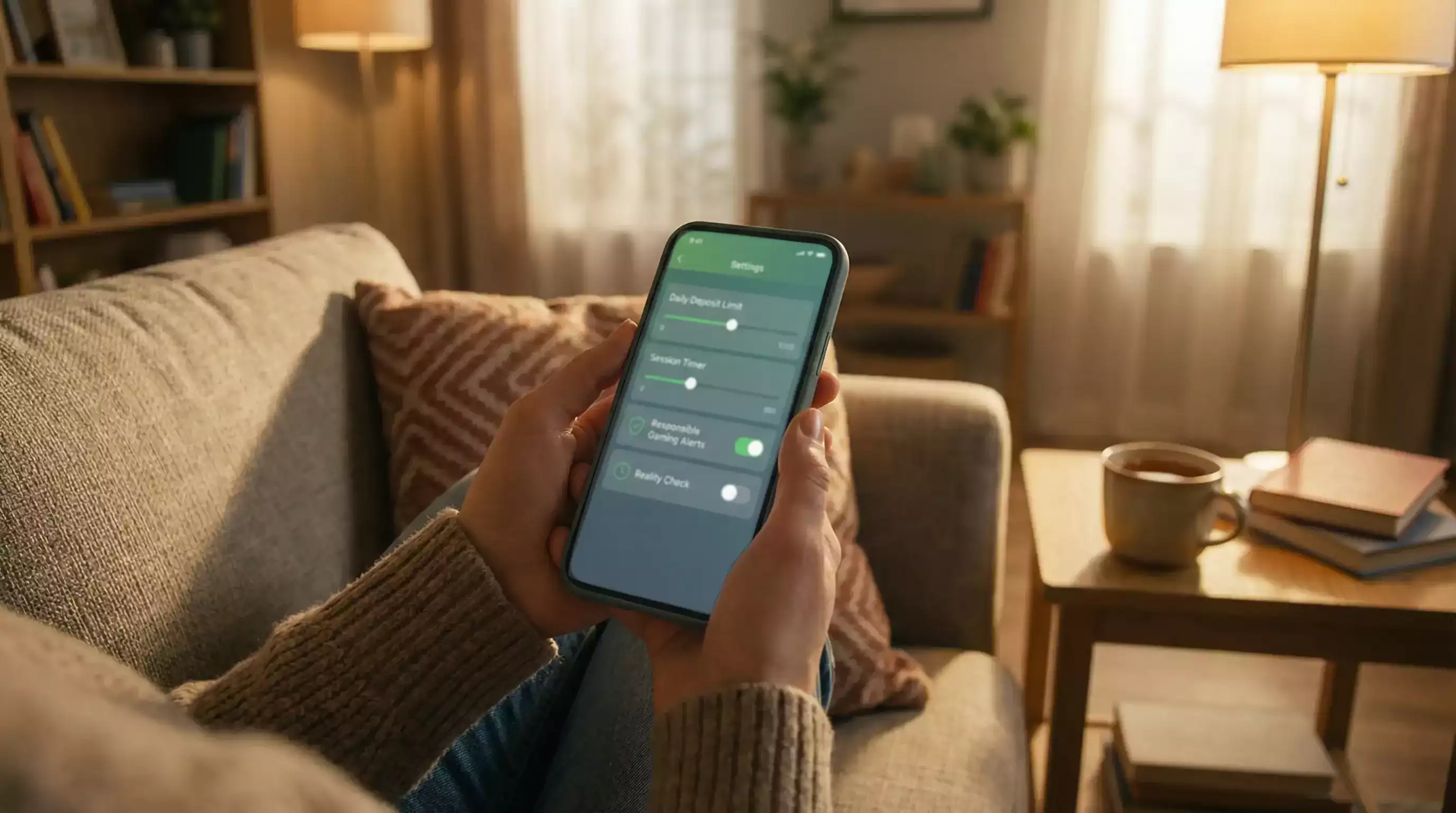
Responsible Gambling Tools: Smart Play Features
Control tools aren’t admissions—they’re strategy. The responsible gambling features available on UK casino apps serve anyone wanting to maintain control over their gambling activity. Using deposit limits, session controls, and cooling-off periods doesn’t signal problems; it signals intentional management of entertainment spending. Smart players use these tools proactively rather than waiting until they feel necessary.
UKGC regulations require all licensed casino apps to provide responsible gambling tools, ensuring every UK player has access to meaningful controls regardless of which operator they choose. From October 2025, all operators must prompt customers to set financial limits before making their first deposit. The specific implementations vary between apps, but core functionalities—deposit limits, reality checks, self-exclusion—appear universally. Understanding what’s available helps you take control before control becomes an issue.
The tools operate preventatively. Setting a fifty-pound weekly deposit limit before you start playing ensures you cannot exceed that amount regardless of in-session decisions. The constraint applies objectively, removing the possibility of exceeding intended limits during moments when judgment might be compromised. This preventative function provides more reliable protection than relying on willpower alone.
Different tools suit different situations. Deposit limits help manage spending. Session limits help manage time. Cooling-off periods provide breaks without permanent consequences. Self-exclusion addresses situations requiring complete separation from gambling. Matching tools to your specific needs creates personalised protection frameworks that support sustainable gambling patterns.
Best casino sites in the UK
- BeOnBetBonus: 100% up to €500 + 100 FS · Payout speed: 1-3 business days
- NightLuckBonus: Welcome Pack + 805% Up To 6400€ + 280 FS · Payout speed: 1-3 business days
- AmunbetBonus: Join now and get 450% up to 2,700 GBP + 450 FS · Payout speed: 1-3 business days
- JetsetspinsBonus: 200% Bonus + 100 Free Spins + Free Royal Wheel · Payout speed: 1-3 business days
- x3betBonus: Welcome Pack 100% Up to £1.000 + 200 Free Spins · Payout speed: 1-3 business days
- SpinFormulaBonus: 550% Up To £15,000 + 550 FS · Payout speed: 1-3 business days
- EvoSpinBonus: 125% up to €2500 + 125 Free Spins · Payout speed: 1-3 business days
- ChanzeBonus: Slots Welcome Bonus #1 200% up to €500 · Payout speed: 1-3 business days
- SlotoSportBonus: 500% up to £ 10 200+ 777 FS · Payout speed: 1-3 business days
- Revery PlayBonus: 100% up to€1,000+ 100 FS · Payout speed: 1-3 business days
Deposit Limits on Casino Apps
Cap your spending before you play. Deposit limits represent the most commonly used responsible gambling tool, providing straightforward spending controls that prevent deposits exceeding chosen amounts over specified periods.
Daily limits restrict how much you can deposit within 24-hour windows. Setting a daily limit of twenty pounds means exactly that—no combination of deposit attempts can exceed twenty pounds until the period resets. This granular control suits players managing gambling as daily entertainment with consistent modest budgets.
Weekly limits provide longer-term spending boundaries. A fifty-pound weekly limit allows flexibility in daily deposit timing while ensuring total weekly spending stays within bounds. You might deposit the full amount Monday or spread it across the week, but the weekly total cannot exceed your limit regardless of pattern.
Monthly limits accommodate players preferring longer budget cycles. Setting a two-hundred-pound monthly limit aligns gambling spending with monthly income and budgeting patterns. This timeframe provides maximum flexibility while maintaining absolute spending ceilings.
Lowering limits takes effect immediately in most implementations. If you realise mid-week that your current limits are too high, reducing them applies instantly to prevent further deposits. This immediate effect ensures limits can be tightened whenever you recognise the need.
Raising limits includes mandatory cooling-off periods. To prevent impulsive limit increases during losing sessions, most apps enforce waiting periods—typically 24 hours to 7 days—before limit increases take effect. This delay provides time for reconsideration, preventing in-the-moment decisions from undermining previously considered limits.
Cross-operator limits don’t exist automatically, meaning deposit limits at one casino don’t affect your ability to deposit elsewhere. Players using multiple casinos must set limits at each one individually. Some players find this fragmentation problematic; others appreciate the flexibility to allocate different limits to different platforms.
Setting limits immediately upon registration establishes controls before any problematic patterns can develop. Making limit-setting part of your standard casino setup process builds the habit of playing within predetermined boundaries from the start.
Session and Loss Limits
More ways to stay in control. Beyond deposit limits, additional tools help manage specific aspects of gambling sessions that deposit limits alone don’t address.
Session time limits cap how long you can play continuously. Setting a two-hour session limit means the app will interrupt or end your session after that duration, regardless of your balance or ongoing activity. Time limits address the engagement-driven playing that can occur independently of financial concerns.
Loss limits prevent cumulative losses exceeding specified amounts. A fifty-pound loss limit stops play once you’ve lost that amount during the defined period, even if your deposit limit would allow further funding. Loss limits specifically target the chasing-losses behaviour that causes many gambling problems.
Reality checks provide periodic reminders of time spent playing. These notifications interrupt gameplay at specified intervals—perhaps every 30 or 60 minutes—to display session duration and net results. The interruption creates moments for conscious decision-making about whether to continue, countering the absorption that extended play sessions can create.
Activity statements and playing history help players understand their actual behaviour over time. Reviewing monthly summaries of deposits, withdrawals, time spent, and net results reveals patterns that in-session awareness might miss. What feels like occasional entertainment might reveal itself as more frequent or expensive than perceived when viewed across longer periods.
Combining multiple tool types creates layered protection. Using deposit limits alongside session time limits alongside loss limits ensures multiple checkpoints exist to catch problematic behaviour that any single tool might miss. Redundant controls acknowledge that no single measure perfectly addresses all risk scenarios.
Cooling-Off Periods
When you need a short break. Cooling-off periods provide temporary account breaks without the permanence or formality of full self-exclusion. They’re designed for moments when you recognise needing a pause but don’t feel the situation requires long-term intervention.
Duration options typically range from 24 hours to 6 weeks. You select how long you want your account inaccessible, and the casino prevents login or play for that period. Once the cooling-off period expires, your account reactivates automatically without requiring any action from you.
Immediate activation means cooling-off periods take effect when you request them, not after delays that might allow continued play. If you recognise right now that you need a break, you can implement one right now rather than gambling through a waiting period.
Marketing restrictions typically accompany cooling-off periods. While cooling off, you shouldn’t receive promotional emails, bonus offers, or other communications that might encourage return before you’re ready. Responsible operators pause marketing to cooling-off accounts automatically.
Cooling-off applies to specific operators only. Taking a cooling-off period at one casino doesn’t affect your accounts elsewhere unless you implement cooling-off at each operator individually. For complete gambling breaks, you’d need to either cool off at every casino you use or consider GamStop registration for comprehensive coverage.
Using cooling-off periods doesn’t mark your account permanently or trigger additional scrutiny when you return. They’re designed as normal tools for maintaining healthy gambling patterns, not as interventions that indicate problems. Using them freely and frequently represents smart gambling management rather than concerning behaviour.
Self-Exclusion and GamStop
The nuclear option—and when it’s right. Self-exclusion goes beyond temporary breaks to provide sustained separation from gambling for players who need it. Understanding both casino-specific self-exclusion and GamStop’s national scheme helps identify which approach fits different situations.
Casino-specific self-exclusion applies only to individual operators. Requesting self-exclusion at one casino closes your account there but doesn’t affect access to other gambling sites. This approach suits players wanting to remove themselves from specific operators while maintaining access to others—perhaps cutting off a casino where they’ve developed problematic patterns while continuing responsible play elsewhere.
GamStop provides UK-wide self-exclusion across all UKGC-licensed operators simultaneously. Registering with GamStop closes accounts and blocks new registrations at all participating sites for your chosen period. This comprehensive approach addresses situations where the problem is gambling generally rather than specific-operator gambling.
GamStop duration options include 6 months, 1 year, 5 years, or 5 years with auto-renewal. Once registered, you cannot gamble at UK-licensed sites until your exclusion period ends. The auto-renewal option, introduced in December 2024, automatically extends your exclusion for another five years, providing continuous protection. Shorter periods allow reassessment of your relationship with gambling; longer periods provide extended protection for situations requiring sustained intervention.
Ending GamStop exclusion early is deliberately difficult. The system is designed to maintain protection even during moments when you might want to resume gambling prematurely. If you register for 5-year exclusion, that period applies fully—there’s no easy override for bad days or changed minds.
GamStop doesn’t cover all gambling opportunities. Unlicensed offshore sites, foreign operators, and some lottery products fall outside GamStop’s scope. The scheme covers UKGC-licensed online gambling comprehensively but cannot address every possible gambling avenue. Players requiring complete gambling cessation should combine GamStop with additional blocking measures.
Registration is straightforward and free. Visiting the GamStop website allows registration using your personal details, which are then matched against operator databases to identify and close your accounts. The process aims for simplicity precisely because those needing it shouldn’t face barriers to access.
When to Seek Further Help
Support exists—here’s how to access it. The tools described above help players maintain control. When control has already been lost, or when you’re uncertain whether your gambling remains healthy, professional support resources provide guidance that self-help tools cannot replace.
GamCare operates the National Gambling Helpline at 0808 8020 133, providing free, confidential support 24 hours a day, every day of the year. Trained advisors discuss gambling concerns, help assess situations, and connect callers with appropriate resources. A single phone call can begin addressing concerns you might otherwise continue ignoring.
BeGambleAware at gambleaware.org provides online resources including self-assessment tools, treatment referrals, and educational information. Their website helps players understand whether their gambling has become problematic and what steps might help address it. The self-assessment tools particularly help those uncertain about whether they have a problem.
Free treatment is available through the National Gambling Support Network, which provides personalised support across Great Britain. GamCare and BeGambleAware can facilitate referrals to appropriate treatment programmes, including face-to-face therapy, online support, and residential treatment where needed. Cost shouldn’t prevent anyone from accessing help—the UK system provides free support for those who need it.
Signs that might indicate needing help include gambling with money you can’t afford to lose, lying about gambling to others, unsuccessful attempts to cut back, gambling causing relationship or work problems, and feeling unable to stop despite wanting to. Recognising these patterns in yourself suggests seeking support sooner rather than waiting until situations worsen.
Friends and family affected by someone else’s gambling can also access support. GamCare provides services for those impacted by others’ gambling, acknowledging that problem gambling affects more people than just the gambler themselves. If someone you care about has a gambling problem, help exists for you too.
Bet safely — start at realmoneycasinoandroid. Also read our casino app deposit limits guide.