

See how crash games relate to other casino formats, money movement, promotions and the evidence behind claims about fairness.
Crash Games in the Wider Casino Landscape
Casino is a broad word, and it conceals more variety than it reveals. It can describe a room arranged around green baize and croupiers, a machine used by one person without any employee standing nearby, or a digital game whose outcome is produced by a computer. These forms share a wager and an uncertain result, but they do not ask for the same kind of attention. The old casino vocabulary has always been more orderly than casino life itself.
Crash casino games belong within this larger family rather than standing apart from it. The label points to a recognisable type of casino entertainment, while the surrounding category includes several different relationships between player, house and outcome. That distinction matters in the UK, where phrases such as online casino crash games can make the subject sound like a separate world. It is not. It is one corner of the casino landscape, with its own identity inside a much wider arrangement of games.
One casino, several kinds of play
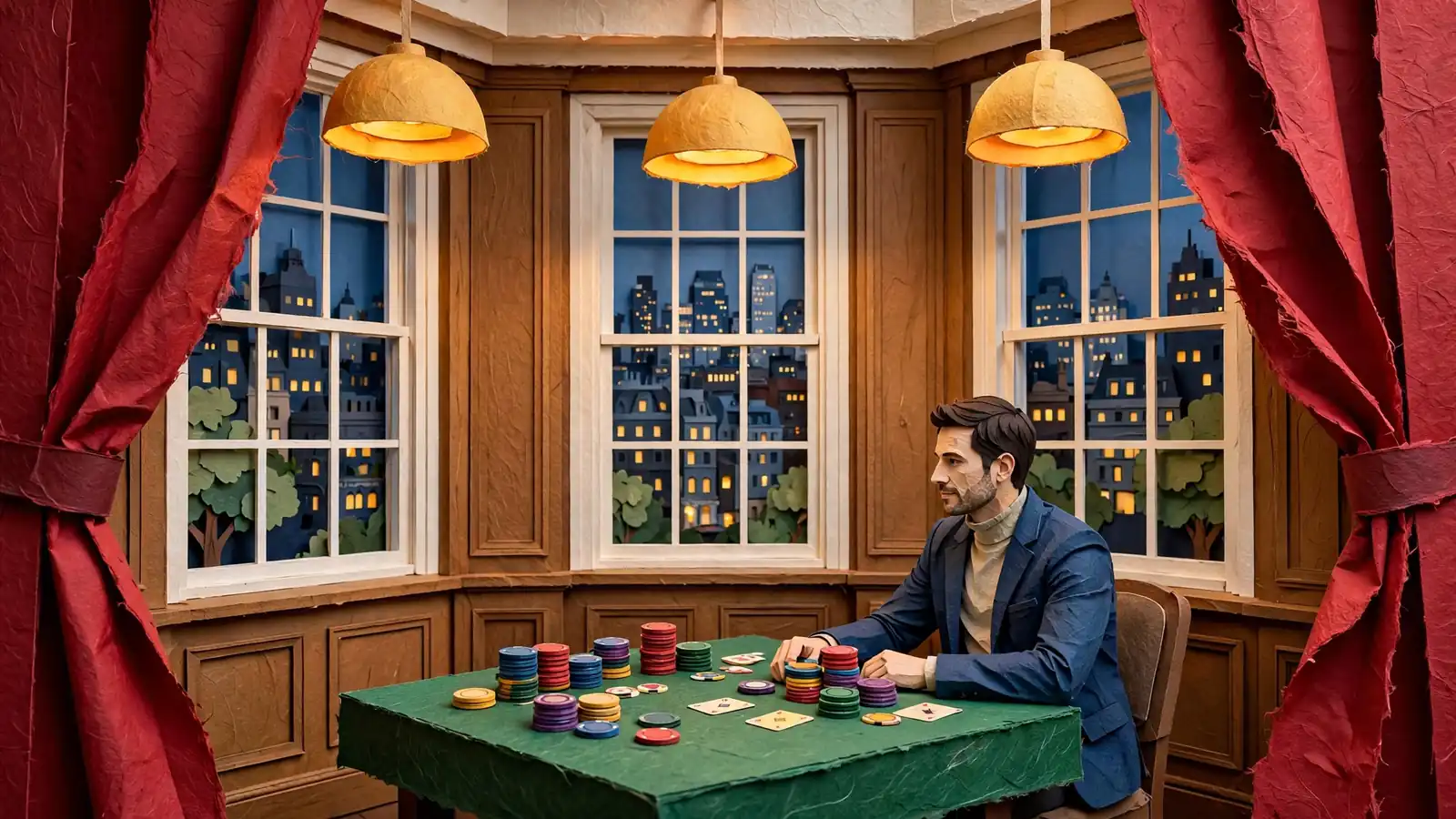
Table games offer the most visible traditional model. Players compete against the casino, not against one another, and the game is generally conducted by a croupier or dealer. The employee’s presence gives the activity a social and ceremonial surface: cards or other equipment are handled in public, decisions take place in sequence, and the table itself becomes a small stage. The machinery of gambling is made visible.
Live Casino UK: Tables, Rules and Real-Money Play
That setting is not merely decorative. A croupier or dealer organises the action and represents the house, even when the players are sitting together. The other people at the table may share the atmosphere, but they are not opponents in the formal sense. The casino remains the party against which the outcome is measured.
Games based on predicting card outcomes create a different emphasis. Hi-lo is a clear example: the player predicts whether the next card will be high, low or the same. The essential act is not a contest with another person, nor a negotiation with a dealer. It is a forecast about what the next card will show. Three possible descriptions, one next event. Casino history has always been fond of turning uncertainty into a tidy menu.
This kind of game helps separate casino activities that are often grouped together too casually. A card-based prediction game does not have the same social shape as a table game, even if both may involve cards and a casino advantage. One centres on a forecast; the other is arranged as a managed contest between player and house. The equipment may overlap, while the experience does not.
Where crash games sit
Crash casino games should be understood against that background of different formats. They are casino games, not a synonym for every online casino activity and not a replacement for table games or card-prediction games. Their place in the category comes from the wager on an uncertain outcome, while their public image comes from the distinctive word “crash”. The name gives the genre a sharper outline than the general word casino ever could.
Aviator Casino Game UK: Licensing and Play
That outline is especially visible when people speak of a casino crash game in an online setting. The expression connects three ideas: a casino product, a particular game format and a digital venue. Yet the venue does not erase the wider distinctions. An online casino may contain games that resemble traditional table arrangements, games organised around card predictions and other forms whose outcomes are handled by computer systems. Moving the casino from a room to a screen changes the setting; it does not make all casino play one uniform activity.
The phrase online casino with crash games therefore describes a selection within a broader collection, not a separate species of gambling institution. The same is true of references to crash games online casino platforms. Such wording may be awkward in ordinary conversation, but the underlying idea is simple: a casino can offer a crash format alongside other casino formats. The menu is wider than the label attached to one game.
The importance of the house
Across these categories, the casino’s position remains central. In table games, the house is the opponent. In a card-prediction game, the player is still making a forecast within a casino arrangement rather than entering a private contest with another participant. The format changes the visible ritual, but the institution behind the game remains part of its meaning.
A crash format may attract attention because it sounds unlike a conventional table game, but novelty of presentation is not the same as a new kind of casino.
This is why lists described as the “best” or “top” crash casino games can flatten the subject before it has been understood. They suggest that the main question is ranking, when the more basic question is classification. A crash format may attract attention because it sounds unlike a conventional table game, but novelty of presentation is not the same as a new kind of casino. It is still part of the old bargain between uncertain outcomes and the house.
The wider landscape also explains why the words casino games UK do not refer to a single experience. British casino culture contains inherited table traditions, card-based predictions and machine-like forms that can be played by one person without casino staff. Online access adds another setting in which these categories can appear. The architecture changes; the distinctions remain useful.
Crash games sit in that arrangement as a modern-looking branch of an older tree. They may be discussed separately because their name is memorable and their format has its own following. Yet the surrounding casino world is not background decoration. It supplies the vocabulary needed to understand what they are: neither a table, nor simply a hi-lo prediction, nor the whole of online casino play, but one form within a category built from many different ways of meeting uncertainty.
Best casino sites in the UK
- BeOnBetBonus: 100% up to €500 + 100 FS · Payout speed: 1-3 business days
- NightLuckBonus: Welcome Pack + 805% Up To 6400€ + 280 FS · Payout speed: 1-3 business days
- AmunbetBonus: Join now and get 450% up to 2,700 GBP + 450 FS · Payout speed: 1-3 business days
- JetsetspinsBonus: 200% Bonus + 100 Free Spins + Free Royal Wheel · Payout speed: 1-3 business days
- x3betBonus: Welcome Pack 100% Up to £1.000 + 200 Free Spins · Payout speed: 1-3 business days
- SpinFormulaBonus: 550% Up To £15,000 + 550 FS · Payout speed: 1-3 business days
- EvoSpinBonus: 125% up to €2500 + 125 Free Spins · Payout speed: 1-3 business days
- ChanzeBonus: Slots Welcome Bonus #1 200% up to €500 · Payout speed: 1-3 business days
- SlotoSportBonus: 500% up to £ 10 200+ 777 FS · Payout speed: 1-3 business days
- Revery PlayBonus: 100% up to€1,000+ 100 FS · Payout speed: 1-3 business days
UK Casinos: Two Regulatory Worlds
The British online casino market in 2026 is often described as having two parallel worlds. A specialist review presents one as the UKGC-regulated market and the other as a collection of offshore platforms operating outside the UK Gambling Commission’s system. That description is useful as a map, provided it is not mistaken for a statement that the two sides carry the same legal status. They do not.
Crazy Time Live Casino in the UK: Games and Licensing
The first world is defined by a local operating licence. The UK Gambling Commission, generally shortened to UKGC, regulates operators serving customers in Great Britain. Any operator offering real-money gambling to customers in England, Scotland or Wales must hold a UKGC licence. The same principle applies to remote gambling businesses selling into the British market regardless of where those businesses are based. A company’s registered address, management office or technical infrastructure elsewhere does not remove the licensing requirement when its commercial activity reaches British residents.
That rule has a history. The Gambling (Licensing and Advertising) Act 2014 established that an operator wishing to take bets from British residents must hold a licence. The point was not merely administrative. A licensing system creates a legal boundary around companies that want access to the British market, making their conduct subject to the requirements of the national regulator rather than leaving the relationship to the terms written by an overseas business.
For a crash casino, the same boundary applies as for any other form of remote gambling. The presence of a particular game does not create a special exemption, and a website’s polished design does not turn an unlicensed operator into a UK casino. A site presenting crash games, card games or other casino products to British customers remains subject to the requirement for the relevant UKGC authorisation when it is offering real-money gambling into England, Scotland or Wales.
UKGC-regulated market
Defined by a local operating licence for customers in Great Britain.
Offshore casinos
Platforms operating outside the UKGC regulatory system, which may still be accessible to UK players.
The second world consists of offshore casinos that operate outside the UKGC regulatory system. Some accept UK players even though they do not hold a UKGC licence. This is why descriptions such as “crash casino sites UK” can refer to two quite different things: sites licensed for the British market and non-GamStop sites that are accessible to people in Britain but sit outside that domestic licensing framework. Accessibility and local authorisation are separate questions. The internet has never been especially interested in keeping those questions neatly together.
An offshore platform may therefore be available to a UK resident without being a UK-licensed casino. Its location or licence may be connected with another jurisdiction, while its website remains reachable from Britain. The fact that an account can be opened, or that a platform displays casino crash games, does not establish that the operator holds permission from the UKGC. Nor does the word “international” supply the missing licence.
The legal position concerns the operator’s conduct in the British market. Remote gambling operators selling into that market must hold the appropriate Gambling Commission licence. This requirement is directed at the business taking the bets. A player does not bear a fine or criminal prosecution merely for playing at an offshore casino without a UKGC licence, although the platform itself remains outside the UKGC system and is not a UK-licensed service.
This distinction matters when people use broad labels such as online crash casinos or crash game casinos. Those phrases describe a category of website, not its regulatory standing. A search for casinos offering crash games may produce UKGC-licensed operators alongside offshore platforms. The shared subject matter can conceal a substantial difference in the legal relationship between the operator and Britain.
UK Casino Dice Games: Stakes, Chance and Online Play
The licensed side is therefore not simply a badge placed beside a casino’s name. It identifies the regulatory regime under which the operator is permitted to serve the British market. The offshore side is defined by absence from that regime: the business may be accessible, may accept UK players and may present itself as a casino, but it does not hold a UKGC licence. “UK-facing” is not the same as “UK-licensed”.
The phrase “best crash casinos UK” can also blur this line by suggesting that all available platforms belong to one comparable national market. They do not. A platform serving British customers under a UKGC licence and a platform accepting those customers from outside the UKGC space may appear in the same online discussion, yet they occupy different legal worlds.
For anyone examining crash casino sites, the first question is consequently jurisdictional rather than decorative. Is the operator licensed to offer real-money gambling into the British market, or is it an offshore business operating beyond the UKGC framework? The answer establishes what kind of service is being considered before any attention turns to its games or presentation. Two worlds, one browser window.
Online Play and the Movement of Money
The online casino changed the physical shape of gambling before it changed its vocabulary. There is no entrance, no carpeted room, no discreet exchange of cash at a counter. A casino game appears instead within a website or app, alongside an account balance and a set of payment instructions. Where the law permits online casino gambling, games can be accessed through these digital services rather than at a premises.
Digital Access
The online casino replaces physical venues with digital interfaces, where account management and payment rails connect play to personal finance.
That distinction matters for anyone looking for a crash casino online. The phrase may suggest a particular kind of game, but the practical question at this stage is simpler: can the relevant casino games be made available through an online casino in the market concerned? Availability is not an abstract quality of the game itself. It depends on whether an operator provides the game online and whether that form of gambling is permitted by law.
The same applies to searches for an online crash game or a crash game at an online casino. The words describe a meeting of two things: a casino game and a remote platform. The screen replaces the table, room or machine, while the account becomes the place where participation and money are connected. The game may be presented through a browser or another digital interface, but the underlying commercial arrangement remains that of an online casino.
This is one reason the language around online gambling can feel more mobile than the gambling itself. “Casino online crash” and “online casino crash game” are compressed phrases, but they point towards an ordinary part of digital life: a casino service being reached remotely, with payment made through electronic rails rather than through a cashier. The compressed wording is inelegant. The transaction is not.
Deposits without the old counter
Money entering an online casino account must travel through a payment system. Open Banking rails have reduced friction in that movement, allowing the banking relationship to play a more direct role in funding an online casino account. The importance is practical rather than theatrical. A deposit is no longer imagined as a separate journey to a gambling venue; it is part of the same online environment in which the account is managed.
Mines Casino Game UK: Demo Play, Risk and Outcomes
Faster Payments has also reduced friction in transfers to and from online casinos. Its relevance is not that it turns gambling into a different activity, but that it makes the movement of funds less dependent on older, more cumbersome arrangements. The casino account and the bank account remain distinct, yet the path between them becomes easier to use.
That convenience cuts in both directions. The payment system is involved not only when money is placed into an account, but also when funds move away from it. Deposits and withdrawals therefore belong to the same wider story: online casino gambling relies on a digital connection between play and personal finance. A crash casino game online may occupy only part of the screen, but the payment infrastructure sits behind the entire account.
The phrase online crash gambling can make the activity sound like a single button pressed in isolation. In practice, online access involves a chain of services: a platform makes casino games available, an account records activity, and payment rails move money. None of these elements should be confused with the character of a particular game. They describe the setting in which the game is offered.
The convenience is structural
Open Banking and Faster Payments do not make an online casino physical, and they do not turn an online casino into a bank. They reduce the practical resistance between the two accounts involved in a deposit or withdrawal. That is their place in the modern casino landscape: not as a feature of a plane crash game casino, nor as an explanation of game outcomes, but as the plumbing beneath remote access.
Open Banking
A system that allows the banking relationship to play a more direct role in funding an online casino account, reducing friction in the movement of money.
This plumbing is easy to overlook because good payment design is quiet. When money moves with less friction, the infrastructure disappears from view. Yet it helps explain why online casino games can be offered beyond the walls of a venue wherever the law permits them. The game is digital; the account is digital; the transfer is digital. The old casino counter has been replaced by a sequence of screens.
Casino Promotions and the Small Print
A casino promotion is not simply extra money placed beside a deposit. It is a conditional arrangement: the operator offers bonus funds, free spins or another incentive, while the account holder must satisfy stated requirements before the resulting balance can be withdrawn. The attractive part is displayed prominently. The restrictive part tends to live in the terms.
That imbalance matters when comparing promotions attached to crash games, casino slots or other online products. A phrase such as “welcome bonus” says very little by itself. The important questions concern the wagering requirement, the eligible games, the period in which the offer can be used, the minimum deposit and any limit on winnings. A promotion can be generous in appearance and narrow in practice.
The 10x ceiling
Since 19 January 2026, gambling incentives cannot impose wagering requirements above 10x the bonus funds. In plain terms, a £20 bonus subject to the maximum permitted requirement would call for £200 in qualifying stakes before the bonus balance could be released for withdrawal.
Chicken Road Game in UK Casinos: What the Label Means
That calculation concerns the bonus, not necessarily the original deposit. The distinction is easy to miss in a page crowded with banners and countdown language. A separate example shows how quickly a larger multiplier changes the arithmetic: £100 in bonus funds with a 35x requirement would mean £3,500 in total bets. That example describes the calculation, not a permissible new offer under the 2026 ceiling.
The date is part of the condition. Promotional wording should be read against the rules applying when the incentive is offered, rather than treated as timeless advertising copy. A specialist review has reported the 10x limit, but promotional terms remain the operative document for a particular offer. The banner is not the contract.
Casino means casino
An incentive cannot combine different gambling product types, such as casino play and sports betting, to unlock one reward. A bonus presented for casino use therefore should not require betting activity elsewhere before it becomes withdrawable. This separation also matters when a promotion is attached to a particular kind of casino game.
For instance, terms may identify which games count towards wagering and which do not. A crash game may be advertised beside a casino offer, yet its contribution to the requirement still depends on the wording of that offer. The same caution applies to a slot-themed incentive: a game described in everyday language as a crash slot or slot crash game does not, by its name alone, establish how it is treated for promotional purposes.
The ban on mixed-product incentives removes one especially obscure condition, but it does not make every remaining clause harmless. Eligibility, excluded games, stake limits, expiry conditions and withdrawal restrictions can still determine whether bonus funds have practical value.
Do
- Read the specific promotional terms and conditions
- Check the wagering requirements and eligible games
Don’t
- Assume a bonus is immediately withdrawable
- Mix different gambling product types to unlock a single reward
Free spins and capped winnings
Free spins carry their own small print. A specialist review reports that many casinos cap winnings generated through free spins, meaning that a large result may not be fully withdrawable. The existence and size of such a cap belong to the individual offer’s terms; they should not be inferred from the number of spins advertised.
This is particularly relevant when a promotion places several products in the same visual frame. A casino may display free spins near a deposit bonus and promote a crash game elsewhere on the page, but each reward can have different qualifying rules. The design encourages the eye to join them together. The terms may not.
What deserves attention
Before treating any casino promotion as a useful addition to a balance, the following points should be visible and understandable:
- the amount of bonus funds or the number of free spins;
- the wagering requirement and what counts towards it;
- the games that qualify;
- any cap on winnings from free spins;
- the minimum deposit attached to the offer;
- the period in which the incentive remains valid;
- restrictions affecting withdrawals.
The word “best” cannot settle these questions. A promotion linked to a crash casino, a bitcoin casino or a conventional slot offer still has to stand on its own conditions. Marketing supplies the invitation; the small print supplies the boundaries.
Crash Casino Games in the UK in 2026
A crash casino game belongs to the broad family of casino gambling, where cash or chips are placed on possible outcomes rather than exchanged for a guaranteed return. The word crash gives the category its public identity, but it does not turn gambling into a different kind of financial activity. At its centre remains the old casino proposition: something uncertain is placed before the player, and money is attached to one possible result among several.
That distinction matters in a market where the label can sound more dramatic than the underlying arrangement. “Crash casino” may suggest speed, suspense or a sudden change in fortune. Those associations describe the mood attached to the name, not a promise about what will happen. A casino game crash is still a wager on an outcome whose arrival cannot be treated as certain. The language is lively; the mathematics remains indifferent.
Live Baccarat Online Casino UK: What to Check
For the UK audience, the phrase crash casino game UK therefore identifies a subject within casino play rather than a separate form of investing or saving. A crash game casino does not remove the essential uncertainty found across casino games. Players commit cash or chips in the hope that a favourable result will occur. When it does, a short-term gain is possible. When it does not, the stake may be lost. That tension is the entire social appeal of gambling, compressed into a format that sounds almost like an event rather than a wager.
The attraction is easy to understand without turning it into a recommendation. Casino games offer the possibility of winning in the short term, and that possibility gives the activity its emotional charge. A result can matter immediately, even though the wider pattern is not governed by any obligation to produce a particular outcome for a particular player. Hope is immediate; probability has no manners.
The other side of the arrangement is less theatrical. Casino games typically give the casino a predictable advantage over the long term. This does not mean that every individual wager produces a loss for the player, nor does it rule out a run of favourable results. It describes the structural position of the game over time: the casino is not merely hosting uncertainty but operating within a model designed to retain an advantage across many outcomes.
Attention The casino typically maintains a predictable mathematical advantage over the long term, despite the possibility of short-term player gains.
That principle applies when people look for casinos with crash games, ask about the best casinos with crash games, or search for a crash casino UK experience. The label may guide attention towards a particular style of casino entertainment, but it does not alter the financial character of the wager. Nor does the phrase “crypto casinos with crash games” change that character; a different setting or payment vocabulary would not make a random casino outcome certain.
In 2026, the useful meaning of the subject is consequently modest and clear. Crash casino games are casino games associated with uncertain outcomes, possible short-term gains and a predictable long-term advantage for the casino. Everything more dramatic belongs to presentation.
Real-Money Play and the Casino’s Long Game
Real-money casino play begins with a simple exchange: cash is placed behind an uncertain outcome. In a physical casino, that stake may appear as chips; online, it is represented by money held in a gambling account. The form changes, but the underlying arrangement does not. A player risks something of known value against an event whose result is not known in advance.
That distinction matters when crash-style games are discussed alongside phrases such as “real-money crash casino” or “crash game casino for real money”. The important word is not the fashionable label but money. Once cash or chips are involved, the activity is no longer merely an amusement built around suspense. It becomes gambling, with a financial result attached to each uncertain outcome or combination of outcomes.
Fast Payout Online Casinos in the UK: Claims Explained
The possibility of a short-term gain is part of what gives casino play its pull. An individual result can favour the player, and a sequence of results can appear to tell a flattering story about skill, timing or a promising crash casino strategy. Yet a favourable moment does not alter the structure of the game. Casino games are generally designed to give the casino a predictable advantage over the long term while preserving the possibility of gains for players in the short term.
That is the casino’s quiet arithmetic. It does not need every individual stake to produce a win for the house. The attraction depends partly on the opposite: players must be able to win sometimes, otherwise the theatre would close quickly. Over a longer run, however, the built-in advantage is expected to work in the casino’s favour. A winning session can therefore coexist perfectly well with a losing pattern across many sessions. The two statements are not rivals; they belong to different lengths of time.
This is why talk of a “crash casino game strategy” can carry more confidence than the situation deserves. A strategy may describe how someone chooses to stake cash or chips, but it cannot turn an uncertain outcome into a certain one. Nor does playing a crash casino free version, where no money is at risk, carry the same financial meaning as real-money play. The appearance may be similar; the consequence is not.
The sober description is less dramatic. Casino gambling offers the prospect of immediate gains against an advantage that belongs to the operator in the long run. That tension is not a defect at the edge of the system. It is the system.
The Nature of Play
- Real-money play involves risking known value against uncertain outcomes
- Strategies cannot guarantee certain outcomes in a game of chance
- A winning session can coexist with a long-term losing pattern
Random Outcomes and Claims of Fairness
Crash games sit within the broader family of random-number casino games. In this kind of gambling, selected random numbers are generated by a computer or by other gaming equipment. The resulting number forms the basis of the game’s outcome, rather than a croupier’s visible dealing of cards or a physical wheel turning across a table.
That description matters because it separates the machinery from the marketing language around it. A computer-generated number explains how an outcome is produced. It does not, by itself, establish that a particular crash game is “provably fair”. Those are different statements: one concerns the generation of an outcome, while the other makes a stronger claim about fairness and proof.
The same distinction applies when casino providers are discussed. A provider may supply or operate a game, but the word itself does not demonstrate how the random-number system functions or whether a fairness claim has been established. Names, branding and technical presentation can make a game appear transparent without changing what can actually be said about its outcome-generation process.
“Random” also needs to be read precisely. It does not mean that a player can know the next result, nor does it turn an uncertain casino outcome into a predictable one. It identifies the role of generated numbers in producing the result. The computer supplies the mechanism; it does not supply a promise of a particular result.
For that reason, descriptions of provably fair crash games should not be treated as interchangeable with a basic statement about computer-generated randomness. The first is a claim requiring its own substantiation. The second is a limited account of how random-number casino games produce outcomes.
Fast Payout Online Casinos in the UK: What Claims Mean
A modest distinction, but an important one.
Crypto Payments on Alternative Platforms
For people looking for a crypto casino crash game, the payment page can be as revealing as the game lobby. Alternative platforms may present digital currencies beside the familiar routes used by online gamblers: Bitcoin, Ethereum and Litecoin can appear alongside conventional payment cards and e-wallets. That combination creates a mixed financial environment rather than a purely cryptocurrency-based one. The word “crypto” describes one available route, not necessarily the whole account.
This distinction matters for anyone comparing a crash casino crypto option with a more conventional online casino. A platform may accept cryptocurrency deposits while still retaining card or e-wallet facilities. The available method is therefore a feature of the individual platform, not a defining rule of crash games themselves. The game’s format and the account’s payment infrastructure belong to different layers of the experience.
Payment claims should be treated as platform-specific. A specialist review has described alternative platforms as supporting Bitcoin, Ethereum and Litecoin together with standard cards and e-wallets, but that description should not be stretched into a statement about every site or every account. Payment menus can differ between operators, and the presence of a currency does not establish every practical condition attached to using it.
Licensing adds another layer of identity. Non-traditional gaming platforms may be associated with licences issued in Curaçao, Malta or Gibraltar. These jurisdictions can therefore appear in descriptions of a crash crypto casino, but the place named in a licence description is not a payment method and should not be confused with the currency accepted at the cashier. One concerns the platform’s stated regulatory home; the other concerns how funds may be moved.
Alternative Payment Methods
Some platforms support a variety of digital currencies including Bitcoin, Ethereum, and Litecoin alongside conventional payment cards and e-wallets.
The result is a marketplace with overlapping labels: a crypto casino crash search may lead to a platform offering digital coins, cards and e-wallets under a licence connected with one of several jurisdictions. None of those labels, taken alone, explains the entire service. The cashier, the operator’s terms and the stated licensing information remain separate pieces of the same rather untidy picture.
Demo Play: What the Available Facts Do Not Establish
A demo version of a crash casino game sounds like a harmless rehearsal: no deposit, no withdrawal, and no money changing hands while the interface is explored. Yet the word “demo” is not a complete description of what sits behind the button.
It does not establish which crash games provide a free-play mode. Some casino pages may display a game without making clear whether it can be opened without an account, whether a balance is fictional, or whether access depends on location and platform. A title appearing in a catalogue is not proof that a playable demonstration exists.
Nor does the label explain how such a mode behaves. It may resemble the real-money screen, but resemblance is not evidence that every feature, timing detail or outcome process is identical. A practice balance can make an activity look familiar while leaving important differences invisible. The small word “demo” carries rather a lot of luggage.
The same caution applies to searches for a crash slot demo. “Slot” and “crash” are often placed near one another in casino language, but that wording alone does not show that a particular game is a slot, or that its free-play version follows the same structure as a conventional slot demonstration. Names are not operating instructions.
A demo should therefore be treated as a presentation mode, not as a promise about real-money play. It may show the appearance of a game and allow interaction without a cash stake; it does not, by its label alone, establish that the experience reproduces every condition of paid play. Nor does it establish that results in the free version predict results when money is involved.
JetX Casino Game in the UK: How It Works
For that reason, claims about a “crash casino game demo” need to remain narrow: availability, operation and equivalence to real-money play are separate matters. One label cannot settle all three.
How Random-Number Casino Games Work
Random-number casino games place the decisive event inside a piece of technology rather than in the hands of a croupier. A computer or other gaming equipment generates selected random numbers, and those numbers determine the outcome presented by the game. The visible screen may show movement, symbols, cards or another changing display, but the underlying role of the equipment is more austere: it produces the numbers on which the result depends.
That distinction matters when considering how to play a crash casino game. The player interacts with the casino interface, while the random-number system supplies the outcome. What appears on screen is therefore not a performance by a dealer or a contest between players. It is the presentation of a result generated by equipment.
This places crash games within the wider family of random-number casino games. Their atmosphere may be brisk and their presentation may suggest momentum, but the technical foundation belongs to the same broad category: computer-generated selections rather than a physical card being dealt or a wheel being spun by hand. A dramatic display does not make the underlying mechanism dramatic.
The language of chance can make a machine seem almost like a character, especially when a game builds suspense around what appears next. Yet the equipment has no intention and no sense of occasion. It generates the numbers; the game displays the resulting event. The human element lies in the decision to stake money, not in controlling the number produced.
A simple summary is enough: random-number casino games use computer-generated or equipment-generated random numbers to establish outcomes. The screen tells the story. The numbers decide it.