

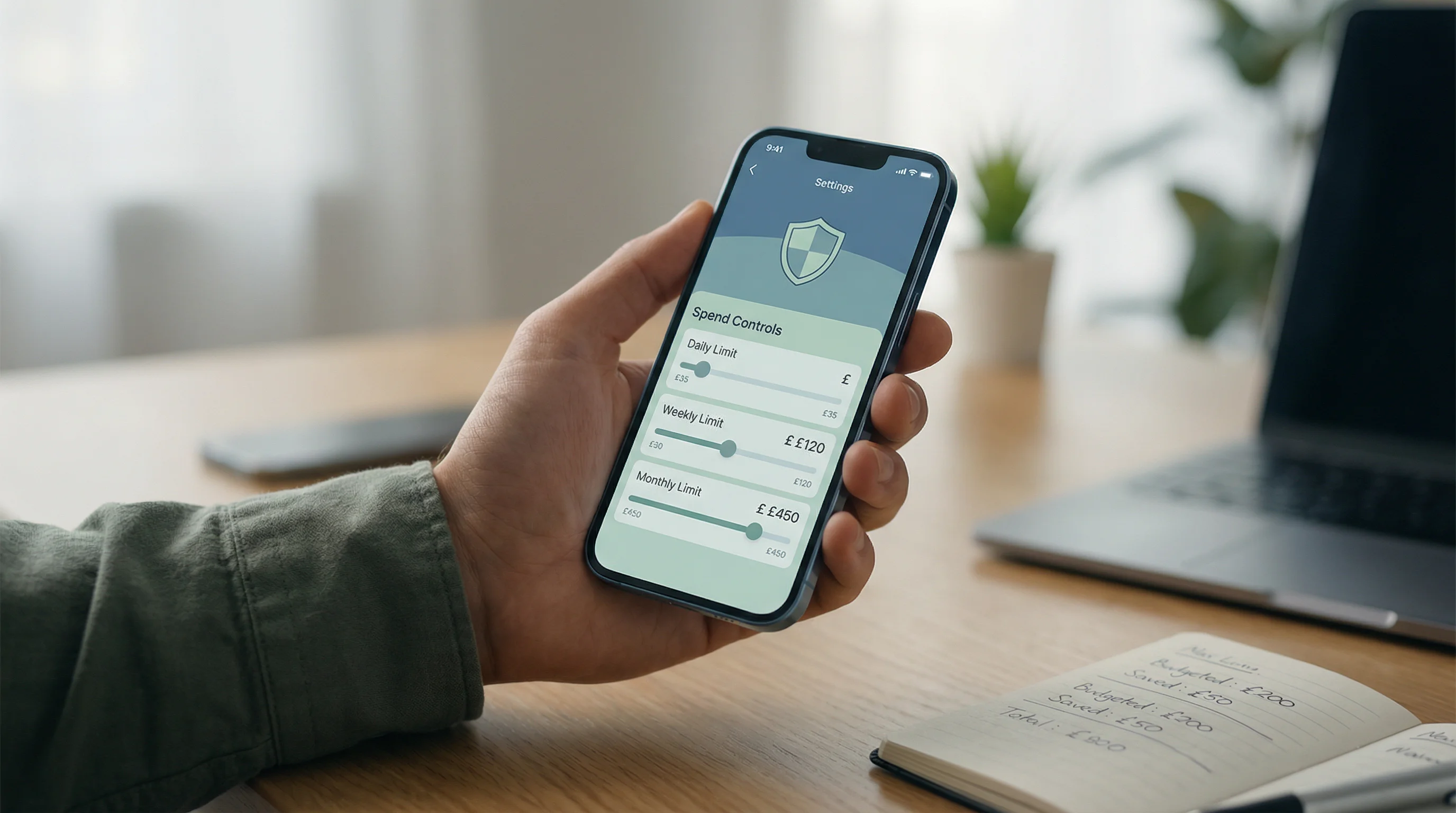
Deposit Limits: Taking Control of Your Spending
Setting limits isn’t restriction—it’s discipline. Deposit limits represent the most practical responsible gambling tool available on casino apps, providing enforceable spending boundaries that operate regardless of in-session decision-making. Unlike promises to yourself about when to stop, deposit limits create actual barriers that cannot be overcome through willpower failures.
The mechanics are straightforward: you specify maximum deposit amounts for daily, weekly, or monthly periods, and the casino prevents deposits exceeding those amounts until periods reset. Once set, limits apply objectively. You cannot talk yourself past them, convince yourself that “just one more deposit” makes sense, or otherwise circumvent the protection they provide.
UKGC regulations require all licensed casino apps to offer deposit limit functionality. This universal availability means every UK player has access to meaningful spending controls regardless of which operators they use. The specific implementations vary slightly between apps, but core functionality—setting and enforcing deposit limits—exists everywhere.
Using deposit limits doesn’t indicate gambling problems. Many players set limits simply as part of responsible budget management, treating gambling entertainment like any other discretionary spending category with predetermined allocations. The tools exist for anyone wanting structured control over their casino spending, whether or not they’ve experienced any difficulties.
Best casino sites in the UK
- BeOnBetBonus: 100% up to €500 + 100 FS · Payout speed: 1-3 business days
- NightLuckBonus: Welcome Pack + 805% Up To 6400€ + 280 FS · Payout speed: 1-3 business days
- AmunbetBonus: Join now and get 450% up to 2,700 GBP + 450 FS · Payout speed: 1-3 business days
- JetsetspinsBonus: 200% Bonus + 100 Free Spins + Free Royal Wheel · Payout speed: 1-3 business days
- x3betBonus: Welcome Pack 100% Up to £1.000 + 200 Free Spins · Payout speed: 1-3 business days
- SpinFormulaBonus: 550% Up To £15,000 + 550 FS · Payout speed: 1-3 business days
- EvoSpinBonus: 125% up to €2500 + 125 Free Spins · Payout speed: 1-3 business days
- ChanzeBonus: Slots Welcome Bonus #1 200% up to €500 · Payout speed: 1-3 business days
- SlotoSportBonus: 500% up to £ 10 200+ 777 FS · Payout speed: 1-3 business days
- Revery PlayBonus: 100% up to€1,000+ 100 FS · Payout speed: 1-3 business days
How Deposit Limits Work
The mechanics of limiting deposits. Understanding how deposit limits function helps you use them effectively and avoid confusion about their operation.
Daily limits cap total deposits within rolling 24-hour windows. If you set a £20 daily limit and deposit £20 at noon Monday, you cannot deposit again until noon Tuesday. The window rolls forward continuously rather than resetting at midnight. This prevents circumventing limits by depositing just before and just after midnight.
Weekly limits restrict cumulative deposits across seven-day periods. A £100 weekly limit might allow five £20 deposits spread across the week or a single £100 deposit followed by no further deposits until the week resets. The flexibility within the overall cap accommodates different playing patterns while maintaining total spending discipline.
Monthly limits provide the longest standard period for deposit control. These limits align with typical income and budgeting cycles, making them natural choices for players managing gambling within overall monthly finances. The extended period provides maximum flexibility for deposit timing while maintaining firm upper boundaries.
Limit hierarchy means multiple limits can apply simultaneously. You might set £30 daily, £100 weekly, and £300 monthly limits together. The most restrictive applicable limit governs at any moment. After depositing £30, the daily limit blocks further deposits that day even if weekly and monthly limits have capacity remaining.
Attempted deposits beyond limits are simply declined. The app won’t process transactions that would exceed active limits. You’ll see messages indicating limit status rather than successful deposit confirmations. This blocking occurs regardless of payment method—the limits apply to deposits themselves rather than to specific funding sources.
Limit periods often overlap with billing cycles for various payment methods, which can create apparent complexity. Understanding that limits track total deposits across all methods during each period—not deposits per payment method—clarifies how the controls actually function.
Cross-casino limits don’t exist automatically. Limits you set at one casino don’t affect deposits elsewhere. Each operator maintains independent limit systems. Players using multiple casinos must set limits at each one separately. This fragmentation allows circumvention through multiple accounts but also provides flexibility for players who legitimately maintain different budgets across different operators.
Setting Up Deposit Limits
How to activate limits. Finding and configuring deposit limit settings follows similar patterns across most UK casino apps, though exact navigation varies by operator.
Account settings or responsible gambling sections typically contain limit controls. Look for menus labelled “Safer Gambling,” “Responsible Gaming,” “Deposit Limits,” or similar terminology. These sections house limit-setting alongside other responsible gambling tools like session limits, reality checks, and self-exclusion options.
The limit configuration interface usually presents fields for each period type: daily, weekly, monthly. Enter your chosen maximum amount in each field. You can set limits for all periods, some periods, or just one—though comprehensive coverage provides the most complete protection.
Confirmation steps may require you to verify limit changes before they take effect. Some apps ask you to confirm understanding that limits will apply; others simply activate limits upon saving. Reading any confirmation messages ensures you understand exactly what you’re implementing.
Active limits display somewhere in your account—often in the same settings section where you set them. Checking this display confirms your current limits and their status. Some apps show remaining deposit capacity within current periods; others show only the limit amounts themselves.
New account registration sometimes prompts limit-setting. UKGC guidance encourages operators to offer limit-setting during registration rather than only afterward. If presented with this option during sign-up, consider it an opportunity to establish controls before any gambling occurs rather than an inconvenience to skip.
Mobile app navigation to limit settings mirrors desktop website navigation at most operators. The same menu structures and setting locations apply regardless of access method. If you know where to find limits on the website, you can typically find them identically in the app.
Choosing the Right Limits
What makes a sensible limit. Selecting appropriate deposit limits requires honest assessment of your financial situation and gambling intentions. Limits should constrain problematic behaviour without preventing sustainable entertainment.
Entertainment budget framing helps determine reasonable limits. What would you comfortably spend on other entertainment—cinema, concerts, dining out—without financial concern? Your gambling budget might reasonably compare to these other discretionary categories. Limits should prevent exceeding what you’d comfortably allocate to any entertainment expense.
Income proportionality provides another framework. Financial guidance typically suggests discretionary entertainment shouldn’t exceed certain percentages of disposable income. Gambling falls within discretionary entertainment. Setting limits aligned with general entertainment budgeting guidelines ensures gambling spending doesn’t disproportionately consume income.
Loss affordability matters more than entertainment framing for some situations. Ask whether losing your entire deposit limit would create any financial hardship. If yes, the limit is too high regardless of entertainment budget considerations. Limits should represent amounts you can lose completely without meaningful impact on financial wellbeing.
Start conservative when uncertain. You can always increase limits later (with cooling-off periods). You cannot easily reduce the impact of deposits made before limits took effect. Erring toward tighter limits initially while you assess your actual gambling patterns makes more sense than setting generous limits and regretting deposit amounts later.
Review limits periodically against actual experience. After a few months of play, evaluate whether your limits feel appropriate. Are you consistently hitting them and feeling frustrated? They might be too tight for your intended entertainment. Are you never approaching them? They might not provide meaningful constraint. Adjustment based on experience optimises the balance between protection and flexibility.
Changing Your Limits
Why changes aren’t always instant. Deposit limit modifications follow asymmetric rules designed to protect players from impulsive decisions that undermine previous protective choices.
Decreasing limits takes effect immediately at most operators. If you realise mid-week that your current limits are too high, reducing them applies right away. This immediate effect ensures tighter controls can always be implemented without delay. The ability to strengthen protection instantly recognises that situations requiring tighter limits shouldn’t wait.
Increasing limits requires cooling-off periods before taking effect. Most operators enforce 24 hours to seven days between requesting higher limits and those increases activating. This delay provides time for reconsideration—if you requested a limit increase during a losing session, the cooling period lets rational thinking resume before impulsive decisions take effect.
The asymmetry is deliberately protective. Making tightening easy and loosening difficult acknowledges that requests to weaken protections often come from emotional states best not accommodated. The friction around limit increases creates pause for reflection that immediate increases wouldn’t allow.
Cooling-off period lengths vary between operators. UKGC requires some delay but doesn’t mandate specific durations. Checking your casino’s specific policy clarifies what cooling period applies to limit increase requests. Knowing the timeframe helps plan if you legitimately need higher limits for upcoming play.
Requests made during cooling periods don’t stack or accelerate. If you request an increase on Monday and another on Wednesday, the Wednesday request typically replaces rather than supplements the Monday request, restarting the cooling period. Making multiple increase requests doesn’t shorten the wait.
Documentation of limit change requests appears in most account histories. You can typically see when limits were changed, what the previous and new values were, and when changes took effect. This history provides reference if questions arise about your limit status at particular times.
When Limits Aren’t Enough
Limits are step one, not the only step. Deposit limits provide meaningful protection for many players, but some situations require stronger measures. Recognising when limits aren’t sufficient helps identify appropriate escalation.
Repeatedly reaching limits and feeling compelled to deposit at other casinos suggests limits alone aren’t adequately controlling your gambling. The cross-operator limitation of independent limit systems becomes problematic when the impulse to gamble exceeds any single operator’s controls. More comprehensive intervention may be warranted.
Increasing limits frequently indicates the limits aren’t serving their protective purpose. Occasional legitimate adjustments are normal; constant upward pressure on limits suggests the constraint is fighting against impulses rather than supporting intended behaviour. Examining why limits keep feeling too tight may reveal needs beyond simple limit adjustment.
Financial impacts despite limits suggest the limits themselves are set too high. If you experience financial stress from gambling while technically staying within limits, the limits don’t match your actual financial capacity. Reducing limits significantly or pursuing additional controls becomes appropriate.
Session limits, loss limits, and cooling-off periods complement deposit limits. Using multiple tool types creates layered protection that catches behaviours any single tool might miss. Combined approaches provide more comprehensive control than deposit limits alone.
Self-exclusion becomes appropriate when other tools prove insufficient. GamStop registration provides UK-wide gambling exclusion that deposit limits cannot achieve. Recognising when to escalate from limit-setting to exclusion represents important self-awareness. There’s no shame in needing stronger measures—the shame would be in needing them and refusing to use them.
Support resources exist for players uncertain whether their gambling has become problematic. GamCare, GambleAware, and other organisations provide assessment tools and counselling that help evaluate whether current controls suffice or whether additional support would help. Seeking such guidance demonstrates healthy self-awareness rather than admitting failure.
Play responsibly — start at realmoneycasinoandroid. Also read our responsible gambling tools on casino apps.