

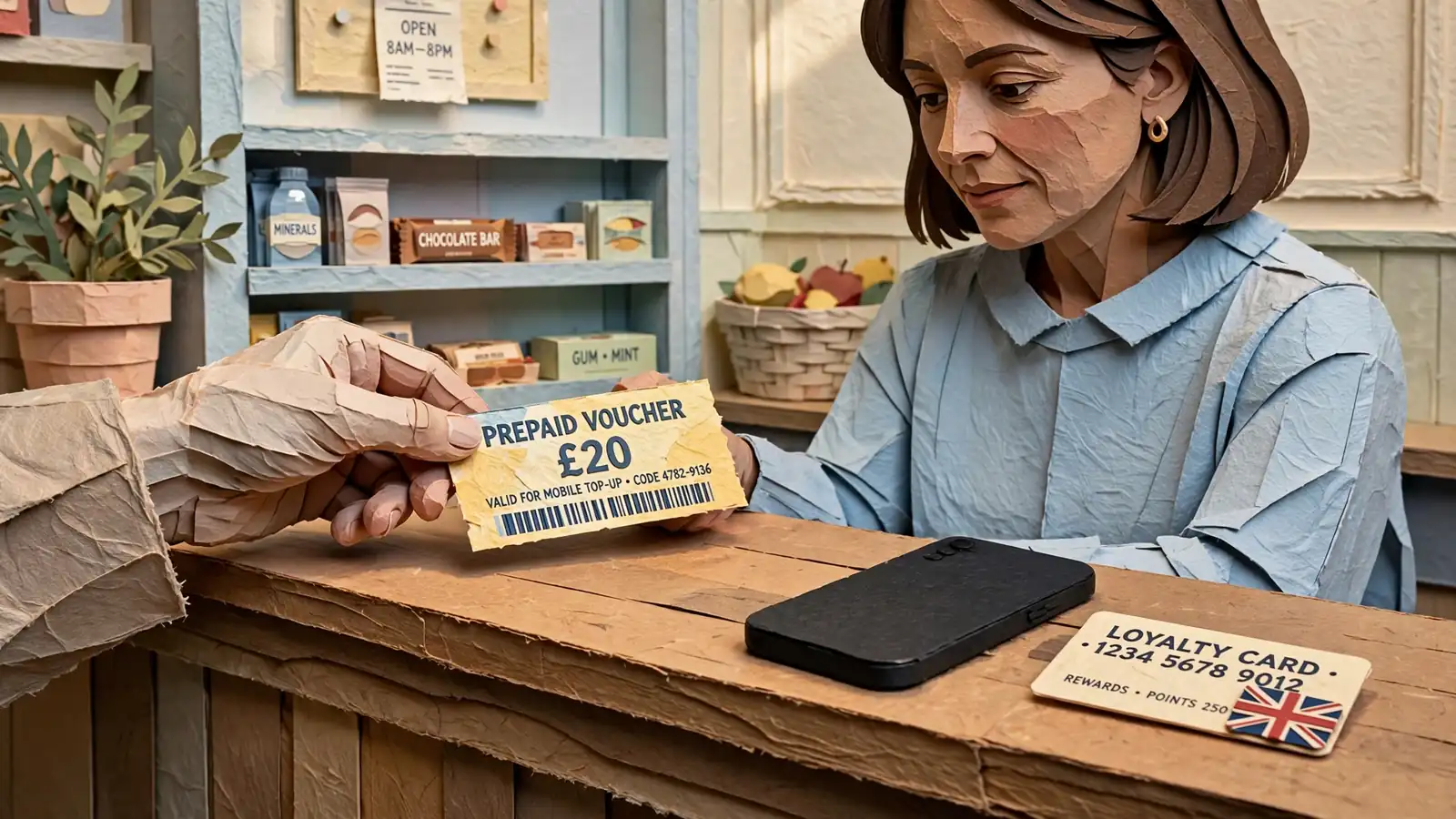
CashToCode listings can go stale, so the live deposit cashier is the clearest sign of availability and payment terms.
CashToCode availability: what the cashier can actually confirm
CashToCode availability in the United Kingdom in 2026 is a cashier question, not a label attached to a casino forever. A payment method can appear in an old review, a comparison table, a forum post or a search result and still be absent when an account is opened. The useful distinction is simple: a mention describes what someone has seen; the cashier shows what the casino is prepared to accept at that moment.
That distinction matters because payment pages age quietly. A casino may change its processing partners, remove a method, restrict it to particular countries, or display different options after login. A page can continue circulating after the underlying arrangement has changed. “CashToCode casino” therefore describes a possibility to investigate, not a confirmed characteristic of every site carrying the phrase.
What counts as confirmation
The strongest practical indication is a CashToCode option displayed inside the casino account’s deposit cashier for a customer located in the United Kingdom. The method should be identifiable by its own name or payment mark, rather than inferred from a general reference to vouchers, cash deposits or alternative payments. Those descriptions are too broad to establish that CashToCode itself is supported.
Casinos That Accept MuchBetter in the UK: What to Check
The cashier is also where restrictions become visible. A payment brand may appear on a general information page but not be available to a particular customer, currency or account. It may be shown among a casino’s wider payment methods while being unavailable in the relevant cashier. A current account-level display is therefore more useful than a historical list of brands.
This is not peculiar to CashToCode. A specialist affiliate review has reported that even Visa and Mastercard listings should be checked against the live cashier, because current UK availability and the eligibility of a particular card product can differ. The point transfers neatly to any payment brand: a named method on a page is evidence of a description, not proof of a transaction being enabled.
A proper check should establish four things without guessing:
- CashToCode is visibly listed in the deposit cashier;
- the casino presents it as available to a UK customer;
- the option can be selected rather than merely displayed in explanatory text;
- the payment screen proceeds to the relevant CashToCode process.
If one of these stages fails, the method has not been confirmed for that account. A logo in a footer is decoration. A cashier option is evidence.
Why lists of CashToCode casinos need caution
A list headed “all CashToCode casinos in the UK” carries a stronger promise than a list of sites that have mentioned the method. No static list can turn a past reference into a present cashier result. The word “all” is especially treacherous: it suggests completeness across operators, accounts and dates, while payment availability can be altered by the operator or its payment provider.
The same caution applies to descriptions such as “best CashToCode casinos” or “new CashToCode casinos”. “Best” is not a payment-status category, and “new” does not prove that CashToCode has been activated. A new casino can advertise many payment routes yet omit the one being sought. Conversely, a familiar casino may show a method only after registration or after the account’s location and currency have been recognised.
A current page can still be useful, but its wording needs to be read precisely. “Payments supported” may refer to deposits generally, to another market, or to a provider’s wider network. “Cash and voucher payments” does not necessarily name CashToCode. “Available at selected casinos” describes a broad service rather than the cashier of a particular operator. Each phrase stops short of confirmation.
Casinos That Accept Maestro in the UK
The United Kingdom detail
The relevant question is not whether CashToCode exists as a payment brand, nor whether a casino has accepted it somewhere in the world. It is whether the payment method is offered to a UK customer by the specific remote gambling licensee being considered. Remote gambling licensees selling into the British market must hold the relevant Gambling Commission licence, and a legal online casino serving UK players must have a current operating licence. That status does not, by itself, establish which payment buttons appear in the cashier.
The two checks belong together but should not be confused. A licence concerns the operator’s authority to serve the market. The cashier concerns the payment route currently made available to an account. One cannot substitute for the other.
A mobile label adds no certainty. An Android casino may use the same account and cashier as its desktop version, but the device name alone does not prove that CashToCode is offered. The payment method must still be visible in the relevant account interface. Nor does the presence of CashToCode on a casino’s desktop page automatically establish a separate mobile arrangement.
The cleanest wording is consequently modest: CashToCode is confirmed only where the UK-facing cashier presently displays and accepts it. Everything else belongs in the category of a lead to check, not a promise. Payment pages are less glamorous than casino advertising, but they have the rare virtue of answering the exact question.
Casinos That Accept Citadel in the UK: Payment Guide
Best casino sites in the UK
- BeOnBetBonus: 100% up to €500 + 100 FS · Payout speed: 1-3 business days
- NightLuckBonus: Welcome Pack + 805% Up To 6400€ + 280 FS · Payout speed: 1-3 business days
- AmunbetBonus: Join now and get 450% up to 2,700 GBP + 450 FS · Payout speed: 1-3 business days
- JetsetspinsBonus: 200% Bonus + 100 Free Spins + Free Royal Wheel · Payout speed: 1-3 business days
- x3betBonus: Welcome Pack 100% Up to £1.000 + 200 Free Spins · Payout speed: 1-3 business days
- SpinFormulaBonus: 550% Up To £15,000 + 550 FS · Payout speed: 1-3 business days
- EvoSpinBonus: 125% up to €2500 + 125 Free Spins · Payout speed: 1-3 business days
- ChanzeBonus: Slots Welcome Bonus #1 200% up to €500 · Payout speed: 1-3 business days
- SlotoSportBonus: 500% up to £ 10 200+ 777 FS · Payout speed: 1-3 business days
- Revery PlayBonus: 100% up to€1,000+ 100 FS · Payout speed: 1-3 business days
When CashToCode is unavailable, other payment routes
When a casino cashier does not offer CashToCode, the practical alternatives fall into four broad groups: debit cards, bank-based payments, prepaid vouchers and e-wallets. They are not interchangeable. Each creates a different relationship between the casino account, the payment provider and any later movement of funds. Availability belongs to the individual cashier, not to the category in the abstract.
That distinction matters because a payment method appearing in a general list does not prove that it is available to every customer, at every casino, or for every transaction. The cashier is the final check. A method may be absent because of the operator, the customer’s location, the account’s status or the provider’s current arrangements.
Debit cards: the familiar route
Debit cards remain among the most recognisable casino deposit options in the UK. Visa and Mastercard are commonly accepted, although the card brands displayed by a casino do not by themselves establish that every card product will work. The current cashier and the casino’s account rules decide that question.
A debit-card deposit connects the gambling account with a bank account in the customer’s name. That straightforward structure can make it an attractive alternative to a voucher-based payment, particularly where the casino already supports the relevant card network. It is still necessary to distinguish debit cards from credit-card payments for gambling: UK-licensed casinos cannot accept the latter.
Casinos That Accept UKash in the UK: What to Check
Cards are therefore a broad alternative to CashToCode, but not an automatic one. The logo on a payment page is an invitation to check, not a guarantee dressed as design.
Bank transfer and open banking
Bank transfers and open banking move the transaction through a bank rather than through a prepaid code or a separate wallet. A specialist review has described open banking and bank transfers as capable of producing instant deposits and fast withdrawals at many sites. That is a description of reported availability, not a permanent property of every casino.
The practical difference between the two can be significant. Open banking may present a direct authorisation through a banking service, while a conventional bank transfer may require the casino’s banking details and the customer’s own bank to complete the payment. The exact route, supported banks and account checks vary between operators.
This category can suit customers who prefer the payment to remain visibly connected to their bank account. It can also be less useful where a particular casino supports only one form of bank payment, or where the cashier lists transfers for deposits but does not make the same route available for another purpose. The payment page has the less glamorous but more reliable answer.
Debit cards
Visa and Mastercard are commonly accepted, though the cashier and casino rules decide final eligibility.
Bank transfers
Directly connects the transaction through a bank or open banking service.
Prepaid vouchers
Value is loaded into a voucher like Paysafecard, often for deposits only.
E-wallets
Services like Skrill and Neteller that place an additional account between the bank and the casino.
Prepaid vouchers
Paysafecard represents a different idea: value is loaded into a prepaid voucher and then applied to a casino deposit. It does not require the same card transaction as a debit-card payment, and it can appeal to people who prefer not to enter bank-card details into a gambling cashier.
Its limitation is fundamental rather than technical. Paysafecard is deposit-only. It should therefore be assessed as a way to put money into an account, not as a complete account-to-account payment route. A customer considering it as an alternative to CashToCode needs to separate the initial funding question from what happens to money later.
This is also why payment categories should not be ranked by convenience alone. A method can be perfectly suitable for a deposit while being unsuitable for the wider movement of funds. The cashier’s description and the operator’s terms need to be read together.
E-wallets
Skrill and Neteller are available at some UK casino sites and form another possible alternative. An e-wallet places an additional payment account between the bank and the casino, which may appeal to customers who already use that wallet for online payments. The casino must still support the particular wallet, and the wallet account must meet the operator’s ownership and verification requirements.
Casinos That Accept E-Checks in the UK: Payment Guide
A specialist review has reported that Skrill and Neteller are often left out of promotions. That is a bonus condition, not evidence that the payment route is unusable. Deposit availability and promotional eligibility are separate questions, and combining them produces a misleading picture of the cashier.
The same separation applies to other wallets. A payment service may be listed by one operator and absent from another; a wallet may be accepted for one account but not another; and the available functions may differ. Names on a comparison page cannot replace the live payment screen.
Comparing the alternatives sensibly
For someone looking beyond CashToCode, the useful comparison is not a league table of supposedly best casinos. It is a check of what each route actually does:
- Debit cards: Visa and Mastercard are commonly accepted, subject to the casino cashier and the eligibility of the card product.
- Open banking and bank transfer: bank-linked alternatives whose availability and precise processing route vary by site.
- Paysafecard: a prepaid deposit method that is deposit-only.
- Skrill and Neteller: e-wallets offered at some sites, with promotional treatment that may differ from ordinary deposit access.
The operator’s current cashier should confirm the method before an account is funded. It should also be checked whether the same named route is available for the relevant onward transaction, rather than assuming that every deposit option has identical functionality. A method that works at one site is not evidence that it works at another.
The central comparison is therefore between payment structures, not brands promising a universal solution. Debit cards connect the deposit to a bank account; bank-based services use direct banking rails; Paysafecard begins with prepaid value; e-wallets use a separate payment account. CashToCode may be present alongside them at one casino and absent at the next. Availability remains local, changeable and stubbornly cashier-shaped.
Deposits, withdrawals and the route money takes back
A payment method shown at the deposit stage is not automatically a route for receiving winnings. The two parts of the cashier serve different purposes: one brings funds into the gambling account, while the other sends money out after a withdrawal request has been approved. That distinction matters when considering CashToCode, debit-card wording, or any other method presented in connection with UK casinos.
Important
A payment method shown at the deposit stage is not automatically a route for receiving winnings.
A casino may display a method for deposits without making it available for withdrawals. In other cases, the same method may be used for both directions, but only after the account and payment details have been checked. The visible presence of a CashToCode option therefore says little about the eventual payout route. The cashier’s withdrawal screen and the operator’s payment terms determine what can actually happen.
Why the original source matters
UK anti-money-laundering controls generally require a casino to return funds to the payment source used for the deposit. This is often described as an original-source or closed-loop approach. It is not a promise that every deposit method can receive a withdrawal; it is a control intended to connect the outgoing money with the account that supplied the incoming funds.
The same principle also helps explain why a casino may ask for more information when a different payout route is requested. Returning funds elsewhere can require additional verification, because the operator must establish who owns the receiving account and why the change is legitimate. A payment account belonging to another person is especially likely to create a problem. The neatest route is generally one account, held by the same customer, used consistently.
This can make a CashToCode deposit less straightforward than the search wording suggests. A phrase such as “casinos accepting CashToCode deposit in the UK” concerns the money entering the account. It does not establish that CashToCode can receive the later withdrawal, nor that a casino will send winnings to a separate debit card simply because that card is available in the cashier. A deposit method and a withdrawal method are related, but they are not interchangeable.
Casinos That Accept E-Cheques in the UK
Approval comes before delivery
The time attached to a withdrawal is not merely the time taken by a bank or payment service to deliver money. The casino first has to review the request, apply its financial controls and approve the release. The withdrawal process therefore contains an internal stage that is invisible once the request has been submitted.
First withdrawals can take longer while KYC is completed. Identity, account ownership and payment details may need to be checked before money is released. A player who has made an immediate deposit may still face a waiting period when requesting a payout, because the two transactions pass through different controls. Instant funding is not an instant withdrawal guarantee.
A specialist review source has reported that withdrawal timing can extend when the first payout is subject to verification. That is a useful description of a process, not a fixed timetable for every UK casino. The operator’s own cashier and terms remain the relevant reference for the account in question.
What happens when the route changes
If the original payment source cannot accept the withdrawal, the casino may offer another route. That does not remove the ownership checks. The replacement account may need separate confirmation, and the operator can request documents before approving the transfer. The added administration is part of the anti-fraud and anti-money-laundering framework rather than evidence that the deposit itself failed.
This is why searches for CashToCode casinos offering real-money play, no-deposit promotions or other incentives should not be treated as evidence about withdrawals. Whether a payment method appears during registration, whether it funds the account, and whether it can receive winnings are separate questions. The money’s return journey begins with the casino’s approval and ends only when the permitted receiving account has been credited.
Cash withdrawals
Cash enters quickly, but checks for withdrawals leave more slowly.
Cash enters quickly. Checks leave more slowly.
Mobile slots and the payment method behind them
A mobile search for slots paid for with CashToCode can sound as though the payment method belongs to the game itself. It does not. A slot is the game; the cashier is where funding is accepted. The account sits between the two, carrying the balance from the payment page to the mobile game lobby.
That distinction matters because a casino may display a mobile-friendly selection of slots while offering a different set of payment methods on its mobile cashier. A desktop payment page and a phone-sized version of the same account are intended to serve the same customer, but the available buttons can still depend on the operator, the device, the browser, the account currency and the payment provider. A familiar logo is not proof that the method is active.
CashToCode therefore needs to be checked at account level. A page mentioning CashToCode, a result describing CashToCode online slots in Britain, or a general statement that a casino supports many deposit methods cannot establish that the method can fund a particular account from a mobile device. The relevant confirmation is the cashier shown after registration and any required checks have been completed. If CashToCode is listed there, the displayed instructions govern the transaction; if it is absent, the mobile slot lobby cannot make it appear.
This is a rather modern little separation: the game travels neatly to a phone, while the money remains subject to the less glamorous architecture of an account.
Casinos That Accept Bitcoin in the UK: Payment Checks
The same principle applies to searches for real-money slots using CashToCode. “Real money” describes the balance used for play, not a special class of mobile game and not a guarantee that every payment route is supported. The cashier decides which deposit method can be used, while the casino account determines whether that balance is available across the mobile site or app. The game itself is not evidence of payment compatibility.
Mobile presentation can also obscure detail. A compact cashier may place payment options behind a menu, separate deposits from account settings, or redirect to an external payment page. Those design choices do not confirm CashToCode support. They only show how the operator has arranged its payment flow. The decisive information remains the named method, the instructions attached to it and the account’s own cashier.
Some UKGC-licensed casinos accept Apple Pay for deposits, demonstrating why mobile payment searches need to be treated as operator-specific rather than universal. Apple Pay support at one licensed casino says nothing about CashToCode at another, and neither establishes that every slot title can be funded through it. Payment acceptance belongs to the casino and its cashier; mobile play belongs to the account and the game platform.
For anyone comparing “pay by CashToCode slots” pages, the sensible reading is consequently narrow. The question is not whether slots are mobile, but whether the chosen casino shows the chosen payment method in its mobile account. Until those two details meet in the cashier, the arrangement remains a description, not a confirmed payment route.
Real-money slot play and withdrawal timing
Real-money slot play has two separate financial events: putting funds into a casino account and receiving money back after a withdrawal request. They may involve the same account and payment details, but they do not move through the system in the same way. A payment method that credits a balance promptly has not thereby promised an equally prompt payout.
The available payment method is determined by the casino cashier, not the slot game itself.
This distinction matters when considering casinos that appear to support CashToCode for slots. If CashToCode is displayed in the cashier and the account is permitted to use it, the method concerns the funding stage: money is added to the casino balance, after which the account can be used for eligible real-money games. The presence of a payment logo does not turn free play into real-money play, and it does not establish that the same route can later receive a withdrawal.
The word “instant” belongs to the deposit, not automatically to the entire transaction. A specialist casino review gives the practical comparison of a card deposit being credited instantly while the related payout takes several business days. That difference is not a contradiction. The deposit is an authorisation and balance-crediting event; a withdrawal is a request that must pass through the casino’s own process before funds are sent onwards.
Several stages can therefore sit between a winning balance and money arriving outside the casino account:
- the withdrawal request is logged;
- the casino checks the account and transaction details;
- internal approval is completed;
- any required account verification is dealt with;
- the payment provider or bank processes the outgoing payment.
The precise order can vary, but the important point is that the casino’s internal approval is part of the timetable. A specialist review also identifies two practical influences on withdrawal speed: the operator’s approval process and whether the account is fully verified. An account that is ready for review presents a different administrative task from one requiring additional checks. Speed is consequently not determined by the game, the apparent immediacy of the deposit, or the moment a withdrawal button is pressed.
For searches centred on “CashToCode slots real money”, the sensible distinction is between the game session and the cashier. CashToCode, where displayed and accepted, would be relevant to funding the balance; the slot itself does not process the deposit or decide how a later payout travels. A “slots app” or mobile casino label changes the screen through which the account is accessed, not the underlying separation between deposit approval and withdrawal processing.
The same applies to searches for slots using CashToCode with no deposit. A payment method does not, by itself, create a no-deposit balance, nor does it remove the conditions attached to withdrawing funds. Real-money play begins with an account balance that the casino recognises as available for wagering. The return journey is separate, slower when approval or verification intervenes, and governed by the cashier rather than the slot reel. Different clocks.
Cards, credit-card rules and casino deposits
A card deposit and a CashToCode deposit belong to different payment categories. CashToCode may appear in a cashier as a separate route, while Visa or Mastercard may appear as card options. The presence of one says nothing about the other. A casino that accepts a particular payment service is not thereby a casino that accepts every debit or card-funded route.
For UK-licensed casinos, debit cards remain a familiar deposit method. Visa and Mastercard debit cards are commonly listed, although the cashier determines whether a particular card product is available at that account. The word “Visa” or “Mastercard” alone is not quite enough: the underlying product must be a debit card eligible for gambling transactions. A card logo is not a legal classification.
Prohibited payments
UK-licensed casinos cannot accept credit-card payments for gambling.
That distinction matters because credit-card payments for gambling are prohibited. The ban took effect on 14 April 2020 and has not been loosened. A UK-licensed casino cannot accept a credit card as a deposit instrument, however ordinary the card may look at first glance. A credit facility attached to a familiar network does not become acceptable merely because the cashier displays the network’s branding.
The same principle applies when credit is routed indirectly. Remote gambling operators cannot accept credit-card funds sent through a money service business, and they cannot accept a wallet payment where that wallet permits credit-card funds to be used for gambling. Changing the doorway does not change the source of the money. A financial detour is still a financial detour.
This leaves a practical boundary around searches for casinos accepting CashToCode alongside debit cards, fast withdrawals or instant banking. CashToCode is not evidence that a credit card is permitted, nor does a debit-card option prove that CashToCode is available. Each payment route has to be identified separately in the casino cashier, with the card’s actual product type taken into account.
The rule also explains why a deposit made through a debit card should not be described loosely as a “card payment” without qualification. In everyday speech, the phrase covers both debit and credit cards; in British gambling regulation, that ambiguity has consequences. Debit-card deposits may be offered, while credit-card gambling payments are barred.
No clever wording repairs that difference. A casino’s promotional label, a payment-page icon or a third-party description cannot turn a credit-funded transaction into an eligible debit-card deposit. The relevant question is what instrument supplies the funds, not how polished the payment screen appears.
Casinos That Accept iDEAL in the UK: Payment Guide
Bonuses do not necessarily follow the payment method
A payment method and a promotion belong to different parts of the casino account. The cashier decides whether a deposit can be processed; the promotional terms decide whether that deposit qualifies for an offer. One does not automatically unlock the other. This is the small administrative seam where many attractive assumptions come undone.
That matters when looking for a CashToCode welcome bonus in the UK. A casino may mention a payment route while applying separate conditions to its welcome promotion. The presence of CashToCode in a cashier, if confirmed there, would not by itself establish eligibility for a welcome offer, free spins, a slots promotion or a no-deposit bonus. Such claims need to be read in the operator’s current promotional terms, not inferred from a payment-method list.
The same distinction applies to bonus codes. A code can have its own qualifying deposit methods, activation rules and exclusions. Entering it does not turn an ineligible payment into an eligible one. Nor does a casino’s general support for real-money slot play prove that a particular payment route will count towards a promotion. Money can arrive while the bonus remains outside the arrangement. Bureaucracy, in its quiet way, has won again.
PayPal illustrates the point. An affiliate review describes PayPal as valued for speed and convenience, while also noting that it may be excluded from bonus eligibility. That is a promotional qualification, not a statement that PayPal cannot be used for a deposit. The two questions should remain separate: can the cashier accept the payment, and does the promotion recognise it?
Deposit availability and promotional eligibility are separate questions.
The same type of affiliate review reports that Skrill and Neteller are available at some sites but are often excluded from promotions. “Often” here belongs to that review’s changing account of promotional practice, not to a permanent rule across UK casinos. The only reliable reading is the offer’s own wording at the time of activation.
Consequently, searches for slots sites accepting CashToCode, or for a CashToCode slots bonus code, should not be treated as proof that a reward exists. A sensible check has several parts: the current cashier, the promotion’s eligible payment methods, any exclusions covering e-wallets or vouchers, and the conditions attached to withdrawing bonus-derived funds. A no-deposit offer requires the same caution. Its name does not make it universal, and a payment brand does not create one where the operator has not published it.
Minimum deposits, limits and the first payment
A CashToCode deposit is still subject to the casino’s own cashier rules. The payment method does not create one universal minimum for every UK casino, and a figure shown on one site cannot be transferred automatically to another. A specialist affiliate review places the starting deposit range at £10–£20, with the exact threshold depending on the selected payment method.
That makes a claimed £5 CashToCode deposit worth treating carefully. It may appear in a search result, an old promotion, or a page describing a different cashier arrangement, but it does not establish a general £5 minimum for UK casinos. The amount displayed at the point of deposit is the useful figure: it belongs to the account, the available payment route and the operator’s current settings.
Casinos That Accept AstroPay in the UK: How to Check
Minimum deposit and financial limit are different controls. The minimum is the smallest amount accepted in a transaction. A financial limit is an account-level safeguard governing how much can be deposited over the period selected in the casino’s controls. One concerns the cashier’s doorway; the other concerns how wide that doorway is allowed to remain open.
UKGC rules require remote gambling licensees to prompt a new customer to set a financial limit before the first deposit. The account must also provide accessible controls for managing that limit. In practice, the first payment is therefore not simply a matter of entering an amount and confirming it. The account’s limit-setting stage comes first, and the chosen deposit amount must fit within the controls already established.
The maximum is not a single market-wide figure either. A casino may apply different maximum deposit limits per transaction, per day or per month. Those limits can vary with the payment method and the account’s status. A newly opened account may therefore show different boundaries from an established, fully reviewed account, while the cashier can apply its own transaction ceiling.
This is why a page promising a universal CashToCode minimum, an instant deposit amount or a fixed ceiling risks turning a temporary cashier setting into a rule. The first payment should be assessed through three separate details: the displayed minimum, the account’s financial limit and the applicable maximum for that transaction. Small print, doing its usual heavy lifting.
Comparing payment costs before choosing an alternative
A payment method can look free at the cashier and still cost money elsewhere. The visible casino charge is only one part of the calculation. The payment provider may apply its own fee, while the card issuer or bank can add another. Currency conversion introduces a further variable, and network charges may appear where the transaction passes through a payment network.
Caution
Currency conversion and network charges can add hidden costs to your transaction.
That makes “cheapest” a poor permanent label for any CashToCode alternative. A specialist review makes the same practical point: the result depends on the casino, the provider, the currency and the amount being moved. A method with no stated casino fee may still be more expensive when its exchange rate is less favourable. A flat charge, meanwhile, may matter little for one transaction but heavily for another. The arithmetic is dull; the bill is not.
What to compare at the cashier
Before choosing a deposit route, the relevant checks are:
- whether the casino adds a transaction fee;
- whether the payment provider charges for the service;
- whether the bank or card issuer treats the payment differently from an ordinary purchase;
- whether the account and payment are handled in the same currency;
- whether a network fee or conversion charge applies;
- whether the displayed amount is the amount actually debited.
The comparison should use the intended transaction amount, not a general reputation attached to Visa, Mastercard, an e-wallet, bank transfer or a prepaid service. Fees can change by provider and account, so a broad claim about the best CashToCode deposit alternative quickly becomes stale.
Currency deserves particular attention. GBP is supported on the relevant casino pages, but the account currency still needs checking before the first transaction. If the account is held in another currency, the exchange-rate spread can outweigh a clearly displayed flat fee. A specialist review specifically notes that this spread can cost more than the charge shown at the start of the transaction. The quiet cost is often the expensive one.
The same comparison applies when considering casinos promoted for CashToCode-compatible slots. The game does not determine the payment cost; the cashier, account currency and payment route do. A slot site is not automatically a low-cost site because its deposit screen shows a familiar logo. CashToCode’s current status and the price of an alternative are separate questions. One concerns availability; the other concerns the money that leaves the account.
CashToCode searches, account ownership and self-exclusion
A search for casinos outside Gamstop that accept CashToCode combines two separate matters. CashToCode is a payment route; Gamstop is a self-exclusion scheme. One does not establish the other. A cashier displaying, or not displaying, a particular payment option says nothing by itself about whether a gambling site is connected to Gamstop.
Casinos That Accept Monzo in the UK: Payment Guide
That distinction matters because payment branding can create an illusion of certainty. A result may associate CashToCode with slots or with casinos described as “not on Gamstop”, yet the payment reference does not verify the operator’s self-exclusion position. Nor does it establish that CashToCode is available when an account is opened, or that the same route can be used later in the opposite direction. The cashier remains the relevant place for account-specific payment information.
There is a more practical question beneath the terminology: whose account is being used? The casino account details and the payment account should belong to the same customer. Matching those basic ownership details reduces the likelihood of avoidable questions or friction during a transaction. A payment route is not a disguise for account identity; it is part of the identity trail.
The cleanest arrangement is often one named account used consistently for both funding and withdrawals. Consistency gives the operator a clearer transaction history and avoids introducing another person’s payment details into an account. It does not override a casino’s checks, but it removes one needless complication. Administrative simplicity has its rare virtues.
This also explains why a CashToCode search should not be treated as a shortcut around self-exclusion. Payment selection cannot determine whether a site is suitable for someone who has chosen to exclude themselves, and a different payment instrument does not alter that status. The relevant questions remain separate: whether the operator participates in the applicable self-exclusion arrangement, whether the account belongs to the customer, and whether the cashier actually supports the intended route.
A consistent payment identity is therefore useful for transaction clarity, but it is not evidence of Gamstop status. The two systems merely meet at the account. They are not the same system.
What is the fastest withdrawal method for UK casinos?
PayPal, open banking and debit cards linked to fast payout systems are generally among the quickest options. The casino’s approval process and whether your account is verified also affect how soon funds arrive.
Which payment methods are accepted in Great Britain?
UK casinos commonly accept debit cards such as Visa and Mastercard; other options at some sites include bank payments, prepaid vouchers and e-wallets. Check the casino’s cashier for the methods available to your account.
Are Visa and Mastercard deposits definitely debit cards?
No. Check the cashier and the eligibility of your specific card: credit-card gambling has been banned in the UK since 14 April 2020.
Is Skrill available?
Yes, Skrill is offered at some UK-friendly casino sites, though availability varies by cashier and it may be excluded from promotions.